Introduction to Projection Mapping for Museums
Projection Mapping for Museums has emerged as one of the most transformative technologies in the cultural and heritage sector. Museums have traditionally relied on static displays, printed panels, and guided tours to convey information. While effective, these methods often struggle to compete with the fast-paced digital world audiences are used to today. Projection mapping offers a solution by turning physical spaces, artifacts, and architecture into dynamic storytelling canvases.
At its core, projection mapping allows museums to project digital visuals onto irregular surfaces such as walls, sculptures, historical buildings, and even entire rooms. Instead of passively observing exhibits, visitors become immersed in narratives that unfold around them. This approach not only captures attention but also improves knowledge retention and emotional connection.
In an era where museums must appeal to younger, tech-savvy audiences while still respecting historical authenticity, projection mapping for museums strikes a perfect balance. It preserves artifacts while enhancing interpretation, making learning both engaging and memorable.
What Is Projection Mapping Technology?
Projection mapping is a visual technology that uses specialized software and high-powered projectors to display images and animations precisely aligned to real-world surfaces. Unlike traditional projection on flat screens, projection mapping adapts content to complex shapes, textures, and dimensions.
Core Components of Projection Mapping
Several elements work together to make projection mapping effective:
- Projectors: High-lumen projectors ensure visibility even in partially lit environments.
- Media Servers and Software: These tools map visuals accurately to surfaces.
- 3D Modeling: Digital replicas of objects or spaces help align projections perfectly.
- Audio Integration: Sound design enhances immersion and storytelling.
- Control Systems: Allow scheduling, automation, and interactivity.
These components ensure that projection mapping for museums delivers consistent and precise visual experiences.
How Projection Mapping Differs From Traditional Displays
Traditional museum displays are usually static, offering limited flexibility once installed. Projection mapping, on the other hand, is dynamic and adaptable. Content can be updated without altering physical structures, making it ideal for rotating exhibitions or temporary installations. It also eliminates the need for physical contact with sensitive artifacts, supporting conservation efforts.
Why Projection Mapping for Museums Is Gaining Popularity
Museums worldwide are embracing projection mapping because it aligns perfectly with modern visitor expectations.
Enhancing Visitor Engagement
Engagement is a key challenge for museums today. Projection mapping transforms visitors from observers into participants. Animated visuals, motion graphics, and interactive elements draw attention and encourage exploration. Visitors are more likely to spend time at exhibits that stimulate multiple senses.
Modernizing Cultural Storytelling
Projection mapping allows museums to tell layered stories. Historical events can be reconstructed visually, ancient ruins can be restored digitally, and artworks can be animated to reveal hidden meanings. This approach respects the past while presenting it through a contemporary lens.
Types of Projection Mapping Used in Museums
Different museum goals require different projection mapping techniques.
Architectural Projection Mapping
This type involves projecting visuals onto building facades, ceilings, or walls. It is commonly used in heritage museums to illustrate architectural evolution or historical transformations. Architectural projection mapping is especially impactful during special events or nighttime exhibitions.
Object-Based Projection Mapping
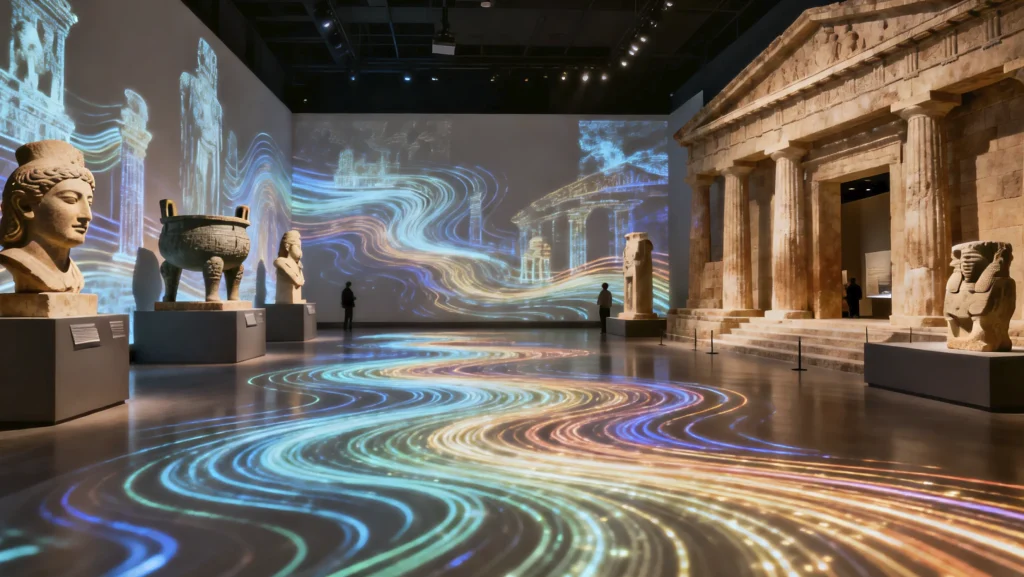
Object-based projection mapping focuses on individual artifacts such as statues, fossils, or machinery. Digital overlays highlight details, show reconstructions, or demonstrate usage without physically altering the object.
Immersive Room-Scale Mapping
Room-scale mapping surrounds visitors with visuals on all surfaces, creating a fully immersive environment. This technique is often used in science museums, art installations, and experiential exhibitions.
Benefits of Projection Mapping for Museums
The advantages of projection mapping extend beyond visual appeal.
Educational Advantages
Projection mapping supports multiple learning styles by combining visuals, audio, and spatial storytelling. Complex concepts become easier to understand when visitors can see processes unfold in real time. This is particularly valuable in science, history, and technology museums.
Emotional and Sensory Impact
Emotion plays a significant role in memory retention. Projection mapping can evoke wonder, empathy, and curiosity. By appealing to emotions, museums create experiences that visitors remember long after they leave.
Planning Projection Mapping for Museums
Successful projection mapping requires careful planning and collaboration.
Concept Development and Storyboarding
Every project should begin with a clear narrative goal. Storyboarding helps align visuals with educational objectives. Curators, designers, and historians must work together to ensure accuracy and coherence.
Technical Requirements and Budgeting
Projection mapping can vary in cost depending on scale and complexity. Budget considerations include equipment, software, content creation, installation, and maintenance. Museums should also plan for staff training and technical support.
Challenges and Limitations of Projection Mapping
Despite its benefits, projection mapping for museums presents certain challenges.
Cost and Maintenance Considerations
High-quality projection equipment and custom content can be expensive. Regular maintenance is required to ensure consistent performance. Smaller museums may need to explore grants or partnerships to fund projects.
Preservation and Conservation Concerns
Heat, light exposure, and vibrations must be carefully managed to protect sensitive artifacts. Collaboration with conservation experts is essential to ensure projections do not cause damage.
Real-World Examples of Projection Mapping in Museums
Many renowned museums have successfully implemented projection mapping. Natural history museums use it to animate extinct species. Art museums use it to reinterpret classical paintings. History museums reconstruct ancient cities and historical events. Institutions such as the Louvre and the Smithsonian have demonstrated how projection mapping can enhance storytelling while preserving authenticity. For further reading, explore this resource on immersive museum technologies: Most Effective Immersive Technology Solutions for Museums
Best Practices for Successful Museum Projection Mapping
To maximize impact, museums should follow best practices:
- Align projections with educational goals
- Keep content concise and clear
- Avoid overwhelming visitors with excessive visuals
- Test installations thoroughly before launch
- Collect visitor feedback for continuous improvement
These practices ensure projection mapping remains effective and meaningful.
Future Trends in Projection Mapping for Museums
The future of projection mapping for museums is closely tied to emerging technologies. Integration with augmented reality (AR), artificial intelligence (AI), and interactive sensors will allow personalized experiences. Real-time data visualization and adaptive storytelling will further enhance engagement. As technology becomes more affordable, projection mapping will become accessible to museums of all sizes.
FAQs About Projection Mapping for Museums
1. What is projection mapping for museums used for?
Projection mapping for museums is used to enhance storytelling, visualize historical events, and create immersive educational experiences.
2. Is projection mapping safe for historical artifacts?
Yes, when properly designed and monitored, projection mapping does not require physical contact and supports conservation efforts.
3. How long does a projection mapping installation last?
Installations can be temporary or permanent, depending on content, equipment, and maintenance plans.
4. Is projection mapping expensive for museums?
Costs vary widely. Smaller installations can be affordable, while large-scale projects require higher investment.
5. Can projection mapping be updated easily?
Yes, digital content can be updated without changing physical structures, making it highly flexible.
6. Does projection mapping improve visitor learning?
Studies and visitor feedback show improved engagement and knowledge retention through immersive experiences.
Conclusion
Projection Mapping for Museums represents a powerful fusion of technology, education, and storytelling. By transforming static spaces into living narratives, museums can engage modern audiences while preserving cultural heritage. Although challenges exist, thoughtful planning and best practices ensure long-term success. As technology continues to evolve, projection mapping will play an increasingly vital role in shaping the future of museums worldwide.