INTRODUCTION
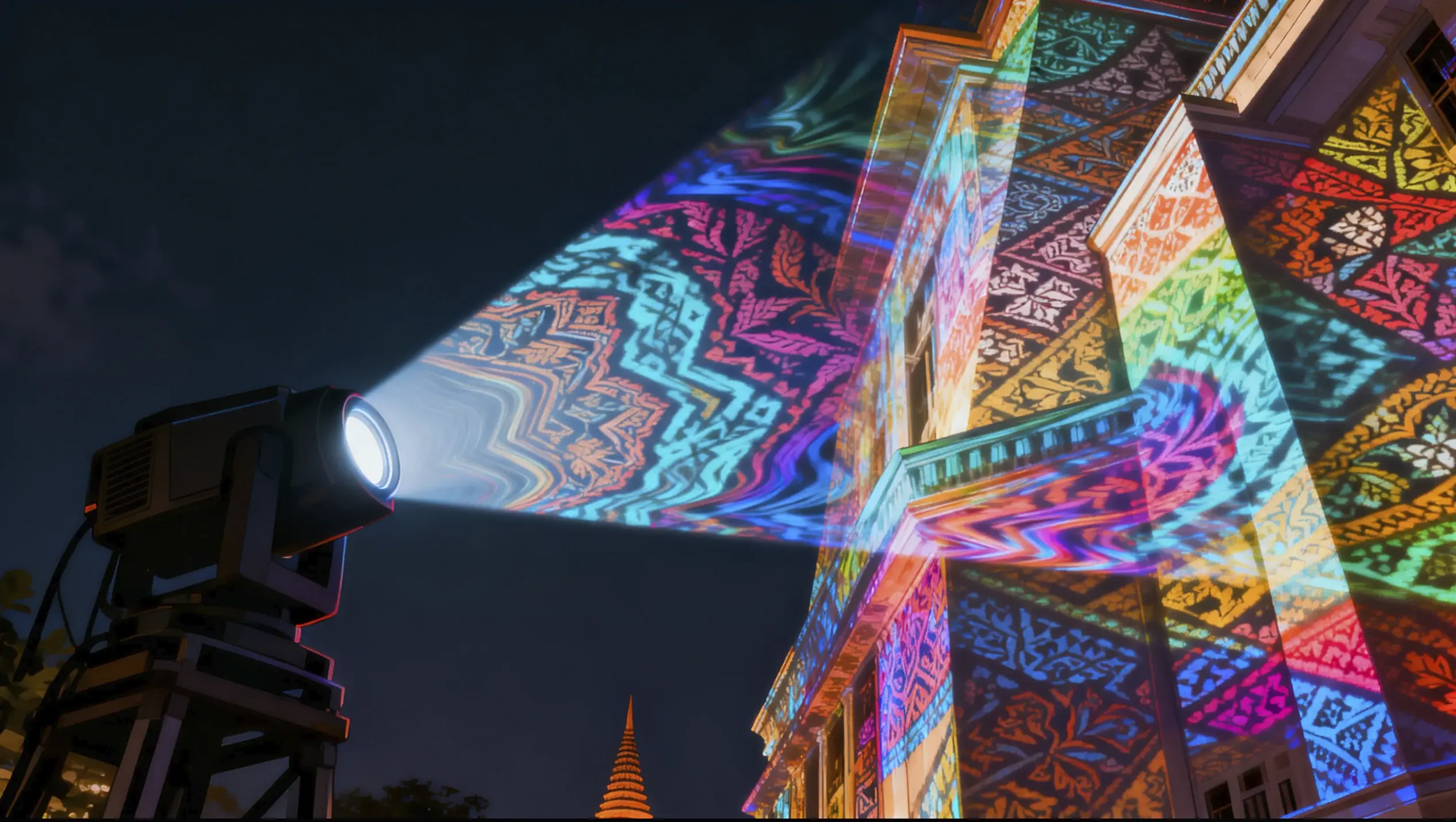
In today’s hyper-competitive marketing landscape, brands are constantly searching for new and innovative ways to cut through the noise, capture attention, and create meaningful connections with their audiences. Traditional advertising channels — TV commercials, print ads, digital banners — are becoming increasingly crowded and less effective. Consumers are tuning out. But there is one medium that consistently stops people in their tracks and leaves them reaching for their smartphones to capture the moment — 3D projection mapping.
Once considered an expensive luxury reserved for global mega-brands and blockbuster entertainment events, 3D projection mapping has evolved into a powerful and increasingly accessible marketing tool that brands of all sizes are using to drive real, measurable business results. From product launches and brand activations to corporate events and retail experiences, projection mapping is delivering impressive returns on investment — and the numbers are beginning to tell a very compelling story.
But how exactly are brands measuring the ROI of projection mapping? What strategies are the most successful companies using to maximize their returns? And what can we learn from the brands that have already cracked the code? This article dives deep into the business case for 3D projection mapping, exploring the strategies, metrics, and success stories that prove this technology is not just a visual spectacle — it is a smart, strategic marketing investment that delivers tangible results.
Whether you are a marketing director exploring new campaign ideas, a brand manager looking to justify the budget, or a business owner curious about the potential of projection mapping for your brand, this guide has everything you need to make an informed decision.
Understanding ROI in the Context of 3D Projection Mapping
ROI — or Return on Investment — is simply a way of measuring whether the money you spend on something is worth it. In marketing, ROI tells you how much value a campaign generates compared to what it cost. For 3D projection mapping, calculating ROI goes beyond just ticket sales or direct revenue. It includes brand awareness, audience engagement, social media reach, and long-term customer loyalty.
What Does ROI Mean for Experiential Marketing?
Experiential marketing is all about creating live, memorable experiences that connect people emotionally to a brand. Unlike a TV ad that people can skip or a banner ad they can ignore, a projection mapping show demands attention. It creates a moment that people want to share — and that sharing is where a huge part of the ROI comes from.
Why Projection Mapping ROI Is Different From Traditional Advertising
Traditional advertising ROI is relatively straightforward — you spend money on an ad and track how many people clicked, bought, or responded. Projection mapping ROI is broader and more powerful. A single show can generate thousands of organic social media posts, news coverage, word-of-mouth buzz, and lasting brand association — all of which have real monetary value that extends far beyond the event itself.
Key ROI Factors for Projection Mapping
Here is a simple breakdown of the main factors that contribute to projection mapping ROI for brands:
| ROI Factor | What It Means | Why It Matters |
|---|---|---|
| Brand Awareness | How many people see and remember your brand | Builds long-term customer loyalty |
| Social Media Reach | Organic shares, views, and mentions online | Amplifies your audience beyond the event |
| Audience Engagement | How deeply people interact with the experience | Creates emotional brand connection |
| Media Coverage | Press and news coverage generated | Free publicity worth far more than ad spend |
| Lead Generation | New contacts and potential customers gained | Directly impacts sales pipeline |
| Sales Impact | Direct or indirect revenue linked to the event | The clearest measure of financial return |
Is Projection Mapping Worth the Investment?
The short answer is yes — when done right. Brands that approach projection mapping strategically, with clear goals and a strong creative concept, consistently report strong returns. The key is to treat it not as a one-off spectacle but as a core part of a wider marketing campaign that amplifies across multiple channels before, during, and after the event.
Key Strategies Brands Use to Maximize Projection Mapping ROI
Getting a strong return from a projection mapping campaign doesn’t happen by accident. The most successful brands follow a clear set of strategies that help them squeeze every bit of value from their investment. Here are the key approaches that top brands use to maximize their projection mapping ROI.
1. Set Clear Goals Before You Start
The biggest mistake brands make is launching a projection mapping campaign without defining what success looks like. Before anything else, ask yourself: what do we want this campaign to achieve? More brand awareness? A product launch? Increased foot traffic? Clear goals shape every decision — from the creative concept to the venue choice — and make it much easier to measure ROI afterward.
2. Choose the Right Location and Audience
Location is everything in projection mapping. The best campaigns happen in high-traffic, high-visibility locations where the right audience will naturally encounter the experience. A well-chosen location amplifies reach, increases organic social sharing, and ensures the brand message lands with the people who matter most.
3. Create Shareable, Story-Driven Content
The content projected is the heart of the campaign. Brands that invest in compelling, story-driven visuals consistently outperform those that focus purely on technical spectacle. The goal is to create a moment so visually stunning and emotionally resonant that the audience can’t help but share it on social media — turning every attendee into a brand ambassador.
4. Integrate With a Wider Marketing Campaign
Projection mapping works best when it is not a standalone event but part of a bigger campaign. Promote the event before it happens, live-stream it during, and share highlights afterward. This three-phase approach — pre-event, live, and post-event — dramatically extends the reach and lifespan of the campaign, multiplying the ROI many times over.
5. Partner With the Right Production Company
The quality of your projection mapping show depends heavily on the team behind it. Partnering with an experienced, creative production company ensures that the technical execution matches the creative vision — and that nothing goes wrong on the night. In Indonesia, Cebirra is the trusted partner for brands that want world-class projection mapping results.
Strategy Comparison Table
Here is a quick guide to help you choose the right strategy based on your campaign goals:
| Strategy | Best For | Expected ROI Impact | Difficulty Level |
|---|---|---|---|
| Clear Goal Setting | All campaigns | Very High | Easy |
| Location Selection | Brand awareness campaigns | High | Moderate |
| Story-Driven Content | Emotional brand campaigns | Very High | Moderate |
| Wider Campaign Integration | Product launches | Extremely High | Moderate |
| Expert Production Partner | Large-scale activations | Very High | Easy |
| Live Streaming | Maximum reach campaigns | High | Easy |
| Social Media Amplification | Youth-focused brands | Very High | Easy |
Quick Strategy Checklist
Before launching your projection mapping campaign, make sure you can tick every box:
| Checklist Item | Status |
|---|---|
| Campaign goals clearly defined | ✅ |
| Target audience identified | ✅ |
| Location scouted and confirmed | ✅ |
| Creative concept approved | ✅ |
| Production partner selected | ✅ |
| Pre-event promotion planned | ✅ |
| Live streaming arranged | ✅ |
| Post-event content strategy ready | ✅ |
Measuring the Impact: Metrics and KPIs for Projection Mapping Campaigns
One of the most common questions brands ask about projection mapping is: “How do we know if it worked?” The answer lies in tracking the right metrics and KPIs — Key Performance Indicators. Without clear measurement, it is impossible to know whether your campaign delivered real value. Here is a simple guide to the metrics that matter most.
What Are KPIs and Why Do They Matter?
KPIs are measurable values that show how effectively a campaign is achieving its goals. For projection mapping campaigns, KPIs help brands track everything from social media buzz to direct sales impact. Setting KPIs before the campaign begins ensures that everyone on the team knows what success looks like — and makes post-campaign reporting much more straightforward.
The Three Phases of Measurement
Measuring projection mapping ROI happens across three distinct phases — before, during, and after the event. Each phase provides valuable data that contributes to the full picture of campaign performance.
| Phase | When | What to Measure |
|---|---|---|
| Pre-Event | Before the show | Social media buzz, ticket registrations, press mentions, website traffic |
| Live Event | During the show | Attendance numbers, live stream viewers, real-time social mentions |
| Post-Event | After the show | Total reach, engagement rate, media coverage, sales impact, brand sentiment |
Key Metrics Every Brand Should Track
Here is a comprehensive breakdown of the most important metrics for measuring projection mapping campaign ROI:
| Metric | What It Measures | How to Track It |
|---|---|---|
| Total Reach | How many people saw the campaign | Social media analytics, media monitoring tools |
| Engagement Rate | How actively people interacted | Likes, shares, comments, saves on social media |
| Earned Media Value | Value of free press coverage generated | PR monitoring tools like Meltwater or Cision |
| Social Media Mentions | How often the brand was talked about online | Hashtag tracking, social listening tools |
| Live Attendance | Number of people at the event | Ticket sales, footfall counters, registration data |
| Live Stream Views | Online audience during the event | YouTube, Instagram, TikTok live view counts |
| Website Traffic Spike | Increase in website visits after the event | Google Analytics before and after comparison |
| Lead Generation | New contacts or enquiries generated | CRM data, landing page sign-ups |
| Sales Impact | Revenue directly or indirectly linked | Sales data comparison pre and post event |
| Brand Sentiment | How people feel about the brand after | Surveys, social listening, sentiment analysis tools |
Simple ROI Calculation Guide
Once you have your data, calculating ROI is straightforward. Here is a simple formula and example to guide you:
| Step | Formula | Example (Rupiah-IDR) |
|---|---|---|
| Total Value Generated | Add up all measurable returns | Rp 500,000,000 |
| Total Campaign Cost | All production and marketing costs | Rp 200,000,000 |
| Net Profit | Total Value − Total Cost | Rp 300,000,000 |
| ROI Percentage | (Net Profit ÷ Total Cost) × 100 | 150% ROI |
What Is a Good ROI for Projection Mapping?
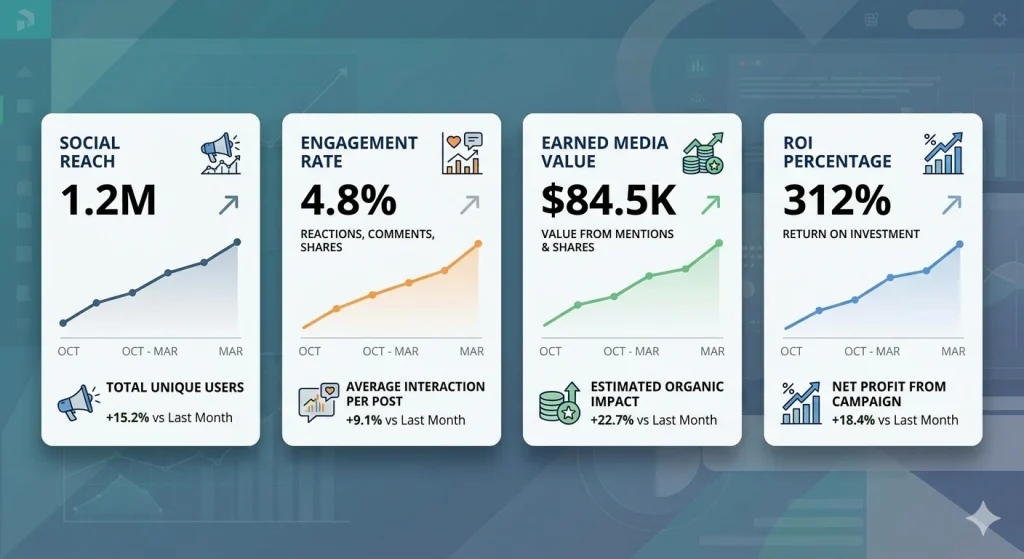
Industry benchmarks suggest that well-executed projection mapping campaigns typically deliver between 150% and 400% ROI when all value streams — including earned media, social reach, and brand sentiment — are factored in. Campaigns that integrate projection mapping into a wider multi-channel strategy tend to sit at the higher end of this range.
KPI Benchmark Guide
Use this table as a quick reference when setting your campaign KPIs:
| KPI | Good Result | Great Result | Exceptional Result |
|---|---|---|---|
| Social Media Reach | 100K — 500K | 500K — 1M | 1M+ |
| Engagement Rate | 3% — 5% | 5% — 10% | 10%+ |
| Earned Media Value | 2x spend | 4x spend | 6x spend+ |
| Live Attendance | 500 — 2,000 | 2,000 — 10,000 | 10,000+ |
| Website Traffic Increase | 20% — 50% | 50% — 100% | 100%+ |
| ROI Percentage | 100% — 150% | 150% — 300% | 300%+ |
Success Stories: Brands That Achieved Exceptional ROI With Projection Mapping
Nothing proves the value of projection mapping better than real-world results. Here are some of the most compelling brand success stories backed by verified data and industry research.
The Big Picture: A Fast-Growing Industry
Before diving into individual brand stories, it helps to understand just how significant projection mapping has become as a marketing tool globally.
Global Market Data
| Stat | Figure | Source |
|---|---|---|
| Market Size (2025) | USD 6.66 billion | Mordor Intelligence |
| Projected Market Size (2030) | USD 17.82 billion | Mordor Intelligence |
| Market Growth Rate | 21.72% CAGR | Mordor Intelligence |
| Dwell Time Increase | Up to 40% | Barco NV |
| Events & Festivals Market Share | 41.8% of all applications | NewMedia Immersive |
| Content Creation Cost | From $10,000 per minute | Business.com |
These numbers tell a clear story — projection mapping is not a passing trend. It is a rapidly growing industry that brands across the world are investing in heavily because it delivers real, measurable results.
1. Disney — Avatar Projection Mapping at Niagara Falls
Disney used projection mapping to promote the release of Avatar, creating a breathtaking holographic projection over Niagara Falls in collaboration with production studio Groove Jones. The campaign was designed to generate maximum media coverage and social media buzz ahead of the film’s release.
What Happened
The installation won multiple awards and was featured extensively in national and international news outlets. Its virality on social media demonstrated how projection mapping can elevate a brand’s reach beyond its immediate audience. Groovejones The campaign is now widely cited as one of the most successful projection mapping brand activations in entertainment history.
Disney Campaign Highlights
| Metric | Result |
|---|---|
| Awards Won | Multiple national and international awards |
| Media Coverage | Featured in national and international outlets |
| Social Media Impact | Viral reach far beyond immediate audience |
| Campaign Outcome | Benchmark for entertainment projection mapping |
2. Lufthansa — Luxury Brand Activation With Projection Mapping
Global airline Lufthansa used projection mapping to create an immersive centerpiece for their Allegris luxury event, bringing their brand vision of innovation and premium travel to life in a dramatic and unforgettable way.
What Happened
Groove Jones utilized projection mapping to create an awe-inspiring holographic centerpiece for Lufthansa’s Allegris event, bringing the brand’s vision of luxury and innovation to life. The installation featured a dynamic animation of Lufthansa’s iconic crane, seamlessly transitioning from a hand-drawn sketch into a full 3D form surrounded by flowing clouds and airplanes. Groovejones
Lufthansa Campaign Highlights
| Metric | Result |
|---|---|
| Event Type | Luxury brand activation |
| Visual Concept | Iconic crane animated in full 3D |
| Brand Message Delivered | Innovation, luxury, premium travel |
| Campaign Outcome | Elevated brand perception among premium audience |
3. Apple — iPhone Launch With Projection Mapping
Apple is well known for creating unforgettable product launch moments — and projection mapping has played a key role in some of their most memorable reveals.
What Happened
Apple’s iPhone launches have used projection mapping to highlight the phone’s features in an engaging, visually stunning manner. Vivacreative By transforming launch venues into immersive visual experiences, Apple consistently generates massive media coverage and social media buzz that extends the reach of each launch far beyond the immediate audience.
Apple Campaign Highlights
| Metric | Result |
|---|---|
| Event Type | Product launch activation |
| Technology Used | Large-scale architectural projection mapping |
| Brand Message Delivered | Innovation, design excellence |
| Campaign Outcome | Global media coverage and viral social sharing |
4. The 2024 Super Bowl — Projection Mapping at Massive Scale
One of the most watched events in the world also embraced projection mapping to create a truly spectacular halftime show experience.
What Happened
The 2024 Super Bowl halftime show featured Panasonic 3D mapping technology that transformed the performance stage into animated environments watched by over 100 million viewers. Newmedia This is perhaps the most powerful demonstration of projection mapping’s ability to reach a truly global audience in real time.
Super Bowl Campaign Highlights
| Metric | Result |
|---|---|
| Event Type | Global live entertainment |
| Technology Partner | Panasonic 3D mapping |
| Live Audience | 100 million+ viewers |
| Campaign Outcome | Global brand exposure at unprecedented scale |
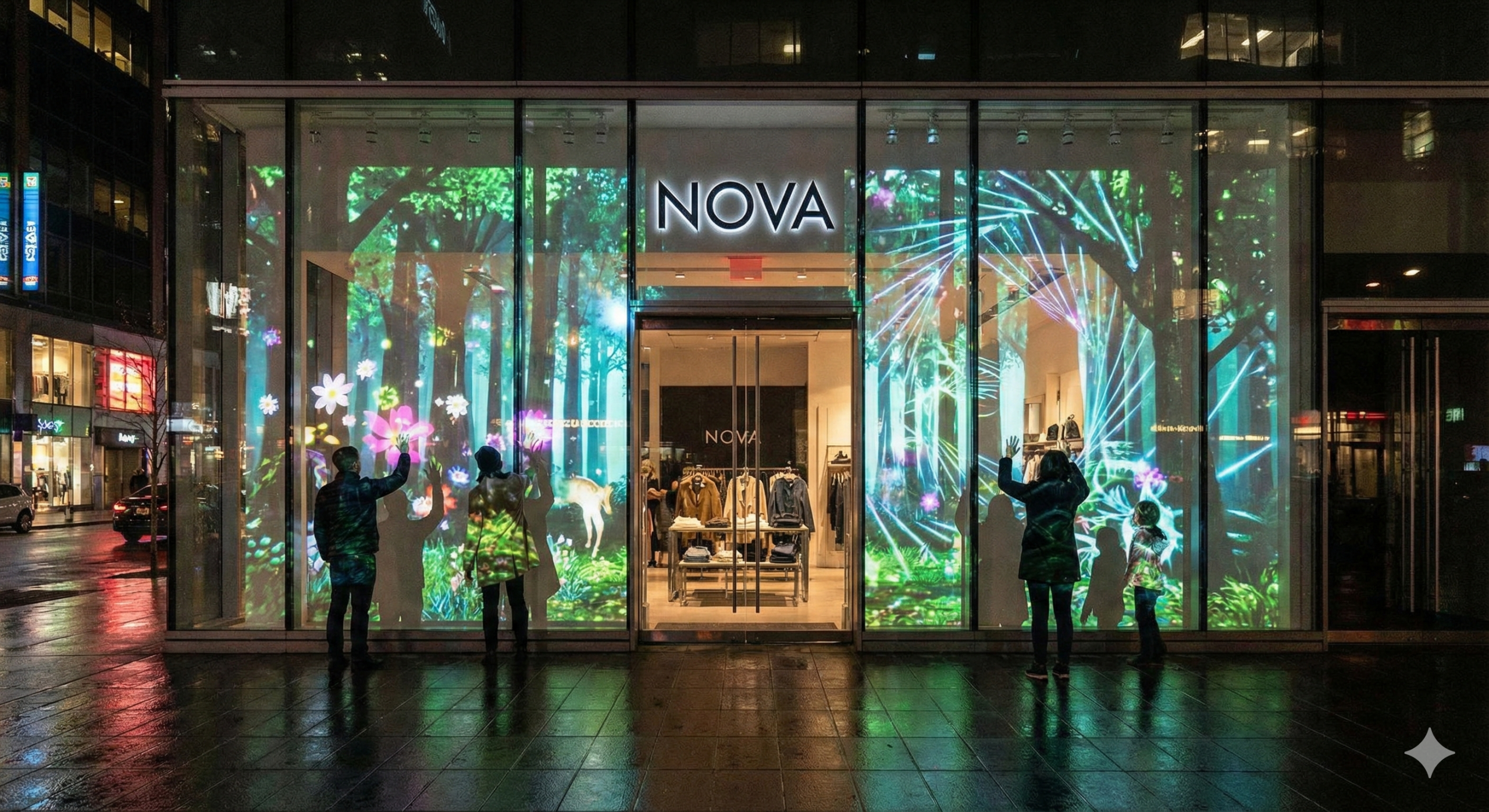
5. Retail Brands — Driving Foot Traffic With Projection Mapping
Across the retail sector, brands are using projection mapping to compete with e-commerce and drive customers back into physical stores.
What Happened
Adoption is particularly visible in flagship retail districts where tenants compete for foot traffic against e-commerce. The result is a positive feedback loop — every successful campaign triggers neighboring brands to commission their own activation, accelerating hardware refresh cycles. Mordor Intelligence
Retail Sector Highlights
| Metric | Result |
|---|---|
| Primary Goal | Drive foot traffic vs e-commerce |
| Dwell Time Increase | Up to 40% |
| Social Media Impact | Outperforms static signage significantly |
| Market Share | 41.5% of North American projection mapping market |
Brand Success Story Comparison
Here is a side-by-side comparison of all five real-world success stories:
| Brand | Event Type | Key Result | ROI Driver |
|---|---|---|---|
| Disney | Film promotion | Multiple awards, viral reach | Earned media & social sharing |
| Lufthansa | Luxury brand activation | Elevated brand perception | Premium audience engagement |
| Apple | Product launch | Global media coverage | Viral social buzz |
| Super Bowl 2024 | Live entertainment | 100M+ viewers reached | Unprecedented live scale |
| Retail Brands | Foot traffic campaigns | Up to 40% dwell time increase | Physical vs e-commerce advantage |
How to Plan a High-ROI Projection Mapping Campaign for Your Brand
Now that you understand the value of projection mapping and have seen real-world proof of its impact, the next step is knowing how to plan your own high-ROI campaign. Here is a simple, practical step-by-step guide to help you get started.
Step 1: Define Your Campaign Goals
Every successful projection mapping campaign starts with a clear goal. Before anything else, ask yourself what you want this campaign to achieve. The clearer your goals, the easier it will be to measure success afterward.
Campaign Goal Planning Table
| Goal Type | Example Objective | Key Metric to Track |
|---|---|---|
| Brand Awareness | Get 1 million social media impressions | Total reach and impressions |
| Product Launch | Generate buzz for a new product release | Press coverage and pre-orders |
| Foot Traffic | Drive more visitors to a physical store | Footfall count before and after |
| Lead Generation | Collect 500 new customer contacts | CRM sign-ups and enquiries |
| Brand Sentiment | Improve positive brand perception | Sentiment analysis scores |
| Sales Impact | Increase sales by 30% post-event | Revenue comparison pre and post |
Step 2: Set Your Budget Realistically
Understanding the cost of projection mapping helps you plan a campaign that delivers maximum ROI without overspending. Here is a simple budget guide based on real industry data.
Projection Mapping Budget Guide
| Campaign Scale | Typical Cost Range | Best For |
|---|---|---|
| Small Indoor Activation | From $10,000 | Product reveals, corporate events |
| Medium Outdoor Event | $50,000 — $150,000 | Brand activations, festivals |
| Large Architectural Show | $150,000 — $500,000+ | Major launches, national events |
| Content Creation | From $10,000 per minute | All campaign types |
| Full Campaign Package | Custom quote | End-to-end brand campaigns |
Custom 3D video content creation costs start around $10,000 for each minute of content, and depending on the scale and quality of your display, projection mapping can cost anywhere from $150,000 to millions of dollars. Business.com Planning your budget early ensures there are no surprises along the way.
Step 3: Choose the Right Venue and Surface
The surface you project onto makes a huge difference to the impact of your campaign. Here is a quick guide to help you choose the right venue.
Venue Selection Guide
| Surface Type | Best For | Key Consideration |
|---|---|---|
| Building Facade | Large-scale brand awareness | High foot traffic location |
| Indoor Stage | Product launches, corporate events | Controlled lighting environment |
| Shopping Mall | Retail brand activations | High dwell time audience |
| Landmark Monument | Cultural and tourism campaigns | Permit and access requirements |
| Event Tent or Structure | Festivals and pop-up activations | Flexible and portable setup |
Step 4: Build a Strong Creative Concept
The creative content is the heart of your projection mapping campaign. When done right, the animations projected wow audiences, encouraging them to snap that moment and share it on social media — creating valuable opportunities for organic social sharing, user-generated content, and amplification far beyond the physical space of your event. Go2 Productions
Creative Concept Checklist
| Element | Why It Matters |
|---|---|
| Strong Visual Story | Keeps audiences emotionally engaged |
| Brand Identity Integration | Ensures consistent brand messaging |
| Cultural Relevance | Connects with local audience values |
| Shareable Moments | Drives organic social media amplification |
| Clear Call to Action | Converts viewers into customers or leads |
Step 5: Plan Your Three-Phase Campaign Strategy
The biggest mistake brands make is treating projection mapping as a one-night event. The most successful campaigns use a three-phase approach to maximize reach and ROI.
Three-Phase Campaign Strategy Table
| Phase | When | Key Activities | Goal |
|---|---|---|---|
| Pre-Event | 2 — 4 weeks before | Teaser content, social media buzz, press releases | Build anticipation and audience |
| Live Event | Night of the show | Live streaming, real-time social posting, media coverage | Maximize live reach |
| Post-Event | 1 — 4 weeks after | Highlight reels, case study content, follow-up campaigns | Extend campaign lifespan |
Step 6: Choose the Right Production Partner
The quality of your projection mapping campaign depends heavily on the team you work with. For clients wanting to incorporate projection mapping, realistic timelines and preliminary creative conversations make the biggest difference in delivering an awesome end product — three to four months is a good minimum timeline. Business.com
How to Choose the Right Projection Mapping Partner
| Criteria | What to Look For |
|---|---|
| Experience | Proven portfolio of successful campaigns |
| Creative Capability | Strong in-house design and animation team |
| Technical Expertise | Advanced projection hardware and software knowledge |
| Local Knowledge | Understanding of local venues, regulations, and audiences |
| End-to-End Service | Handles everything from concept to execution |
| Client References | Positive testimonials from past brand clients |
In Indonesia, Cebirra ticks every box on this list. As the country’s leading projection mapping company, Cebirra brings together world-class technical expertise, deep creative talent, and unmatched local knowledge to deliver campaigns that exceed expectations every time.
Step 7: Measure and Report Your Results
After the event, measuring your results is essential to proving ROI and informing future campaigns. Use this simple post-campaign reporting guide to capture all the value your projection mapping campaign generated.
Post-Campaign Reporting Table
| Metric | Data Source | Reporting Tool |
|---|---|---|
| Social Media Reach | Instagram, TikTok, YouTube | Platform analytics |
| Earned Media Value | Press coverage and news mentions | PR monitoring tools |
| Website Traffic | Traffic spike after event | Google Analytics |
| Lead Generation | New contacts and enquiries | CRM system |
| Sales Impact | Revenue before and after event | Sales data comparison |
| Brand Sentiment | Audience perception post-event | Social listening tools |
Complete Campaign Planning Checklist
Use this master checklist to make sure your projection mapping campaign is fully planned and ready to deliver maximum ROI:
| Planning Step | Status |
|---|---|
| Campaign goals clearly defined | ☐ |
| Budget set and approved | ☐ |
| Venue scouted and confirmed | ☐ |
| Creative concept developed | ☐ |
| Production partner selected | ☐ |
| Timeline confirmed (3-4 months minimum) | ☐ |
| Pre-event promotion planned | ☐ |
| Live streaming arranged | ☐ |
| Post-event content strategy ready | ☐ |
| KPIs and measurement tools in place | ☐ |
Why Projection Mapping Is One of the Smartest Marketing Investments a Brand Can Make
In a world where consumer attention is harder to capture than ever, brands need bold, innovative strategies that cut through the noise and create lasting impressions. 3D projection mapping does exactly that. As we have explored throughout this article, it is not just a visually spectacular technology — it is a proven, measurable marketing tool that delivers real, tangible returns for brands across industries.
The Key Takeaways
From understanding what ROI means in the context of experiential marketing, to discovering the strategies that top brands use to maximize their returns, the evidence is clear. Projection mapping works — and the numbers back it up.
What We Have Learned
| Key Insight | Why It Matters |
|---|---|
| ROI goes beyond direct sales | Social reach, earned media, and brand sentiment all contribute real value |
| Strategy is everything | Clear goals, strong content, and the right partner make all the difference |
| Measurement is essential | Tracking the right KPIs ensures every campaign improves on the last |
| Real brands get real results | Disney, Lufthansa, Apple, and the Super Bowl all prove projection mapping delivers |
| Planning takes time | A minimum of 3-4 months ensures flawless execution and maximum impact |
The Bottom Line
The projection mapping market is valued at USD 6.66 billion in 2025 and is forecast to reach USD 17.82 billion by 2030 — and for good reason. Brands that embrace this technology are not just creating beautiful visual experiences. They are building deeper emotional connections with their audiences, generating massive organic reach, and driving measurable business results that traditional advertising simply cannot match.
The Future Is Bright — and It Is Projected
As technology continues to evolve and become more accessible, projection mapping will only become a more powerful and essential tool in the modern brand’s marketing arsenal. Brands that leverage building-scale visuals boost on-site dwell time by up to 40% — a statistic that speaks volumes about the power of immersive experiences to keep audiences engaged and connected to a brand.
The brands that act now — that invest in projection mapping as a core part of their marketing strategy — will be the ones that stand out, get remembered, and win the hearts and minds of their audiences for years to come.
Ready to Maximize Your Brand’s ROI With 3D Projection Mapping? Choose Cebirra.
If this article has convinced you that 3D projection mapping is the right move for your brand, there is only one name you need to know — Cebirra.
As Indonesia’s #1 projection mapping company, Cebirra has built a reputation for delivering world-class visual experiences that captivate audiences, elevate brands, and generate exceptional ROI. From the very first creative conversation to the final pixel of the show, Cebirra’s team of expert designers, animators, and technicians work tirelessly to ensure every campaign exceeds expectations.
Why Choose Cebirra?
| What Cebirra Offers | What It Means for Your Brand |
|---|---|
| End-to-End Service | From concept to execution — all under one roof |
| World-Class Creative Team | Stunning, story-driven content that audiences love |
| Advanced Technical Expertise | Flawless execution every single time |
| Deep Local Knowledge | Unmatched understanding of Indonesian venues and audiences |
| Proven Track Record | Trusted by top brands, government bodies, and event organizers |
| Customized Solutions | Every campaign is tailored to your specific goals and budget |
Take the First Step Today
Whether you are planning a product launch, a brand activation, a national celebration, or a corporate event, Cebirra has the expertise, creativity, and passion to make your vision a reality.
👉 Contact Cebirra today and take the first step toward creating a projection mapping experience that your audience will never forget — and that your brand’s ROI will thank you for.
Frequently Asked Questions About Projection Mapping ROI for Brands
What is projection mapping ROI?
Projection mapping ROI refers to the measurable return a brand receives from investing in a 3D projection mapping campaign. This includes both direct returns such as sales and lead generation, and indirect returns such as brand awareness, earned media value, social media reach, and improved brand sentiment.
How much does a projection mapping campaign cost?
The cost of a projection mapping campaign varies depending on scale and complexity. Custom 3D video content creation starts from around $10,000 per minute of content, while full campaign costs can range from $150,000 to millions of dollars for large-scale architectural shows. Contact Cebirra for a customized quote tailored to your brand’s goals and budget.
How do brands measure projection mapping ROI?
Brands measure projection mapping ROI by tracking key performance indicators (KPIs) across three phases — pre-event, live event, and post-event. Key metrics include total social media reach, earned media value, live attendance, website traffic spikes, lead generation, sales impact, and brand sentiment scores.
What is a good ROI for a projection mapping campaign?
Well-executed projection mapping campaigns typically deliver between 150% and 400% ROI when all value streams are factored in — including earned media, social reach, and brand sentiment. Campaigns integrated into a wider multi-channel marketing strategy tend to achieve the highest returns.
Which brands have successfully used projection mapping?
Many global brands have successfully used projection mapping to achieve exceptional results. Disney used it to promote Avatar with a viral holographic projection over Niagara Falls. Lufthansa created an award-winning brand activation at their Allegris event. Apple has used it for iPhone launches, and the 2024 Super Bowl halftime show featured Panasonic 3D mapping technology watched by over 100 million viewers.
How does projection mapping increase brand awareness?
Projection mapping increases brand awareness by creating visually stunning, shareable experiences that attract large live audiences and generate massive organic social media coverage. Research shows that projection mapping campaigns can boost on-site dwell time by up to 40% and generate earned media value that far exceeds the original campaign spend.
How long does it take to plan a projection mapping campaign?
A minimum of three to four months is recommended for planning a projection mapping campaign. This timeline allows sufficient time for creative development, technical preparation, venue scouting, content creation, and pre-event promotion — all of which are essential to delivering a flawless, high-impact show.
What industries benefit most from projection mapping?
Projection mapping delivers strong ROI across many industries, including retail and fashion, automotive, technology, entertainment, tourism, food and beverage, and real estate. The events and festivals segment accounts for 41.8% of all projection mapping applications globally, making it the largest and most active sector.
How big is the projection mapping market?
The global projection mapping market is valued at USD 6.66 billion in 2025 and is forecast to reach USD 17.82 billion by 2030, growing at a CAGR of 21.72%. This rapid growth reflects the increasing demand from brands and event organizers for immersive, high-impact visual experiences.
How can Cebirra help my brand maximize projection mapping ROI?
Cebirra is Indonesia’s leading projection mapping company, offering end-to-end services from creative concept development to technical execution. With a world-class team of designers, animators, and technicians, Cebirra delivers customized projection mapping campaigns that captivate audiences, elevate brands, and generate exceptional ROI. Contact Cebirra today to start planning your next campaign.