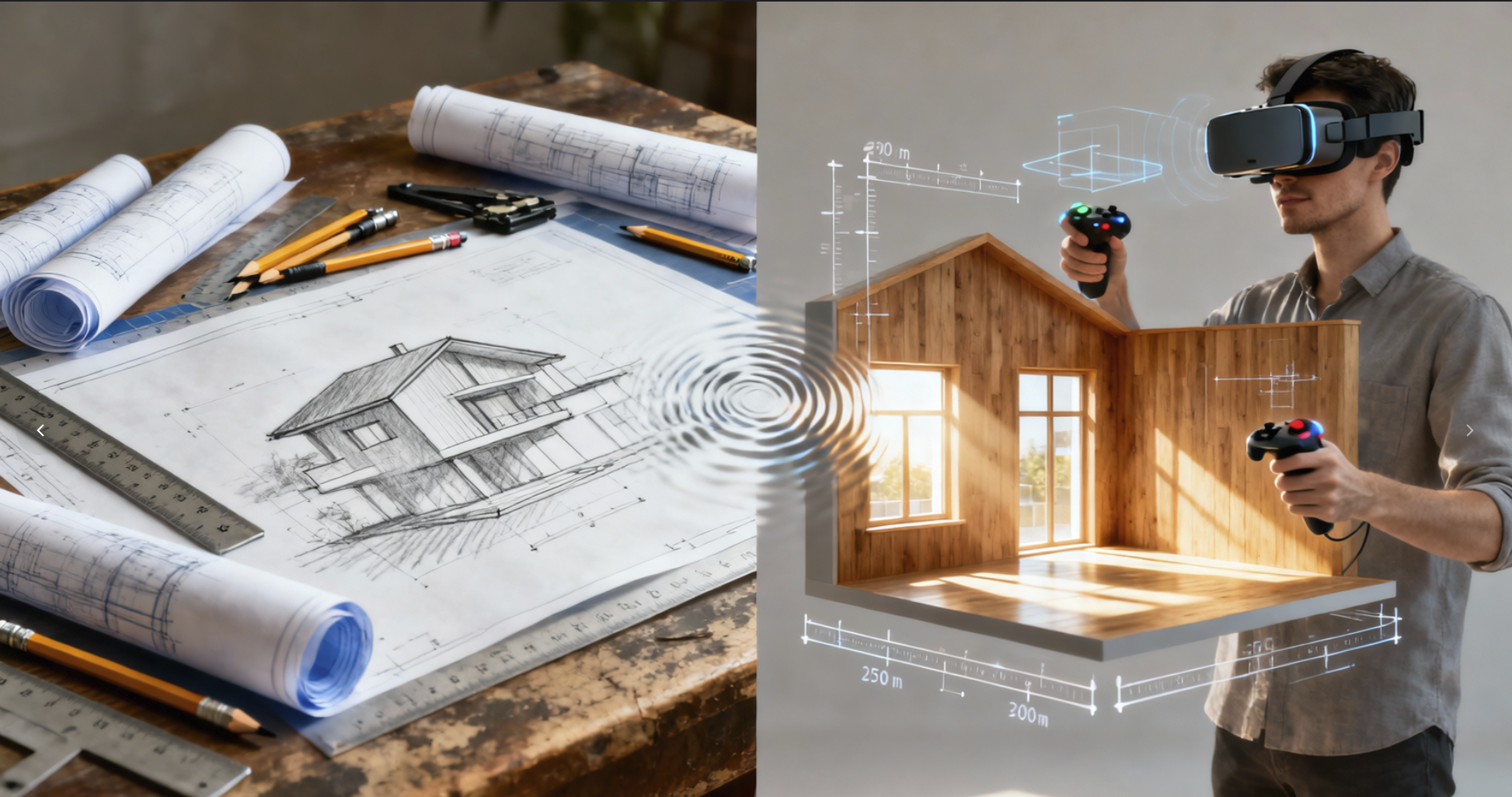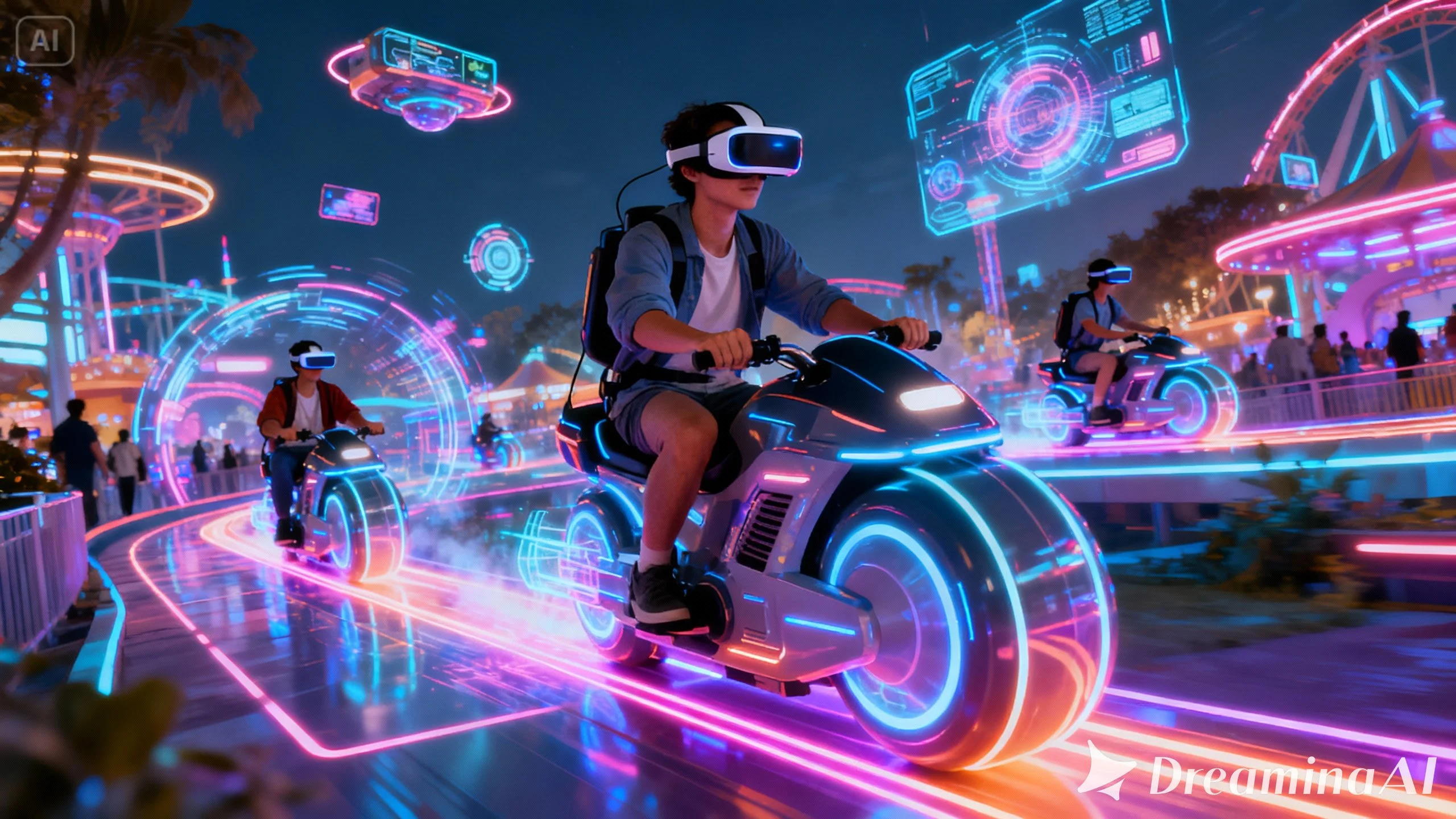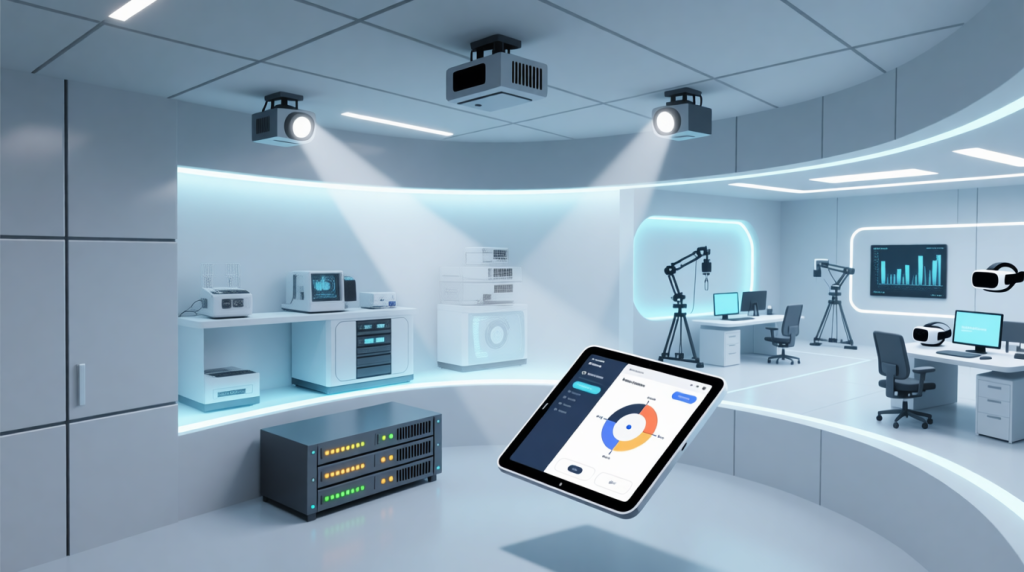
In today’s experience-driven economy, immersive projection rooms have evolved from sci-fi concepts into powerful tools for engagement—transforming how brands captivate audiences, museums tell stories, and event venues create unforgettable moments. But for businesses considering this cutting-edge technology, one question looms largest: How much does a commercial immersive projection room actually cost?
Unlike home theaters or basic AV setups, commercial-grade immersive environments demand precision engineering, high-brightness projectors, edge-blending software, 360° content, and often custom architectural integration. Costs can range from $50,000 for a modest pop-up activation to over $1 million for a permanent, multi-sensory installation in a flagship museum or luxury retail space. This article breaks down the real-world pricing factors across event venues, retail environments, and cultural institutions, helping you forecast budgets, avoid hidden expenses, and maximize return on investment in 2025 and beyond.
What Is a Commercial Immersive Projection Room? Use Cases Across Industries
A commercial immersive projection room—often referred to as a projection dome, 360° immersive theater, or CAVE (Cave Automatic Virtual Environment)—is a purpose-built space where high-resolution projectors, synchronized software, and spatial audio systems envelop viewers in a seamless, interactive visual environment. Unlike consumer-grade setups, these installations prioritize scalability, reliability, and audience throughput, making them ideal for public and professional use.
In event venues, such as concert halls, convention centers, and luxury hotels, immersive rooms serve as dynamic backdrops for product launches, galas, or theatrical performances. For example, a brand might transform a blank ballroom into a journey through the cosmos or an underwater reef using real-time projection mapping—a spectacle that can elevate ticket prices and social media buzz.
In retail, immersive projection rooms redefine experiential marketing. Flagship stores use them to showcase seasonal campaigns (e.g., a virtual fashion runway inside a mirrored cube) or allow customers to “step into” a product’s story—like walking through a forest to experience an eco-friendly skincare line. These installations boost dwell time, conversion rates, and brand recall.
Museums and cultural institutions leverage immersive rooms for educational storytelling. Rather than static exhibits, visitors can walk through ancient Rome, witness climate change simulations, or explore digital art galleries—all within a controlled, scalable environment. The Louvre, for instance, has experimented with immersive projections to recreate lost artifacts or visualize excavation sites.
Critically, these systems are not just about visuals—they integrate motion tracking, gesture recognition, and even scent or haptic feedback in high-end cases. The defining feature is total environmental immersion, where the boundaries between physical and digital space blur. As projectors grow brighter (20,000+ lumens), laser-based, and more energy-efficient, and as real-time rendering engines like Unreal Engine become standard, the technology is becoming more accessible—but costs still vary widely based on scale, duration, and interactivity.
Key Cost Drivers: Hardware, Software, Room Design, and Content Creation
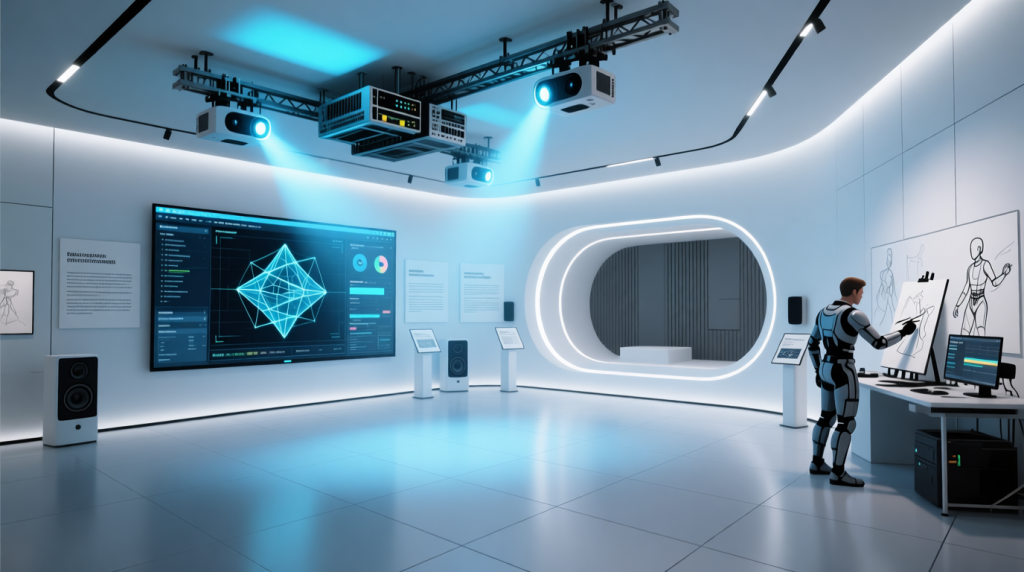
When budgeting for an immersive projection room cost, commercial clients quickly discover that the price isn’t tied to a single component—it’s the sum of four critical pillars: hardware, software, architectural integration, and custom content. Understanding each helps avoid costly surprises and aligns investment with business goals.
To provide clarity, here’s a detailed breakdown of typical cost ranges and components across these four pillars:
| Cost Driver | Typical Cost Range | Key Components | Notes & Tips |
|---|---|---|---|
| Hardware | $60,000 – $500,000+ | Laser projectors (15K–30K lumens), media servers, edge-blending processors, mounts, lenses, cooling systems | 6–12 projectors often needed; laser projectors last 20,000+ hours but cost $15K–$50K each |
| Software | $7,000 – $70,000 | Real-time engines (Unreal Engine, TouchDesigner), warping/blend software, interactivity SDKs, licensing | Enterprise licenses can be annual; open-source options reduce costs but limit support |
| Room Design & Integration | $20,000 – $250,000+ | Acoustic treatment, seamless matte walls, HVAC upgrades, rigging, lighting control, floor/ceiling modifications | Retrofitting is cheaper than new builds; hidden infrastructure adds 15–30% to base cost |
| Custom Content Creation | $30,000 – $200,000+ | 360°/8K video production, spatial audio design, interactive triggers, motion graphics, revision cycles | Content is reusable—repurpose for social, web, or trade shows to improve ROI |
Hardware typically represents 40–60% of the total budget. High-brightness laser projectors are essential for large-scale or ambient-light environments. A full 360° room may require 6–12 units, plus media servers (e.g., disguise, 7thSense) and edge-blending processors from brands like Scalable Display or Dataton—adding significant but necessary cost.
Software powers the experience. Real-time rendering platforms enable dynamic, interactive visuals, while calibration tools ensure seamless image alignment across curved or irregular surfaces. Licensing models vary: some charge upfront, others annually—so factor in recurring costs.
Room design is often underestimated. Walls must be non-reflective and seamless; ceilings may need reinforcement for projector mounts. HVAC upgrades are critical—projectors generate substantial heat. Even lighting and flooring affect immersion and safety.
Finally, custom content is where storytelling comes alive. A 5-minute branded narrative with interactive elements can cost $100,000+, but this asset can be updated seasonally or licensed across markets. Museums and retailers increasingly treat content as a long-term IP investment, not a one-time expense.
💡 Pro Tip: Use a phased rollout—start with core projection and looped content, then layer in interactivity or multi-sensory features as budget allows. This approach reduces upfront risk while proving ROI early.
Event Venues: Temporary vs. Permanent Installations – Budget Ranges and ROI

For event venues, the immersive projection room cost hinges on one critical question: Is this a one-time activation or a permanent attraction? The answer dramatically shifts both budget and strategy.
Temporary or pop-up installations—common for product launches, festivals, or VIP experiences—prioritize speed, portability, and visual impact. These setups often use modular frames, short-throw projectors, and pre-rendered content. A basic 270° immersive pod (20′ x 20′) can be deployed in 48 hours and costs $50,000–$150,000, including labor, shipping, and 2–3 custom content sequences. High-end agencies may charge up to $300,000 for celebrity-backed galas with real-time interactivity and social media integration.
In contrast, permanent installations—like those in luxury hotels, casinos, or convention centers—demand industrial-grade reliability. Projectors must run 10+ hours daily with minimal maintenance. Here, the immersive projection room cost typically starts at $250,000 and can exceed $750,000 for multi-zone environments with motion tracking, scent diffusion, or haptic flooring. However, these systems generate recurring revenue through ticketed experiences, branded partnerships, or premium event rentals.
To help venue operators and event planners compare options, here’s a breakdown of typical costs and use cases:
| Installation Type | Cost Range | Setup Time | Key Components | Best For | ROI Strategy |
|---|---|---|---|---|---|
| Pop-Up / Festival Pod | $50,000 – $150,000 | 1–3 days | Modular frame, 3–6 projectors, pre-rendered content | Music festivals, brand launches, trade shows | Per-event fee, social media buzz |
| High-End Temporary | $150,000 – $300,000+ | 3–7 days | Real-time rendering, interactive sensors, custom AV | Celebrity events, luxury galas | VIP ticket premiums, sponsorships |
| Semi-Permanent Lounge | $180,000 – $400,000 | 2–4 weeks | Hidden projectors, acoustic treatment, branded content | Hotels, nightclubs, convention centers | Upsell packages, repeat bookings |
| Flagship Permanent Room | $400,000 – $750,000+ | 6–12 weeks | 8–12 laser projectors, media servers, climate control, automation | Resorts, casinos, experiential venues | Year-round revenue, branded residencies |
Return on investment (ROI) is measurable. A Las Vegas resort reported a 35% increase in event bookings after installing a permanent immersive lounge. Similarly, a European conference center recouped its $400,000 investment in 14 months by charging a 20% premium for “Immersive Suite” rentals.
Key cost-saving tip: Hybrid models are rising. Venues install permanent projection infrastructure (mounts, cabling, acoustic treatment) but swap content and layout per event—reducing long-term hardware costs while maximizing flexibility.
Remember: for event spaces, the goal isn’t just immersion—it’s memorability. And in the experience economy, memorable moments drive bookings, shares, and revenue.
Retail & Brand Experiences: Engaging Shoppers with Immersive Tech (Pricing Insights)
In today’s competitive retail landscape, immersive projection rooms are no longer a luxury—they’re a strategic tool for differentiation. From flagship stores to pop-up boutiques, brands use these environments to transform passive browsing into emotional, shareable journeys. But how much does this innovation cost, and is it worth it?
For luxury or experiential retail, a permanent immersive projection room typically ranges from $200,000 to $600,000. This includes laser projectors (often hidden in ceilings or floors), projection-mapped mannequins, gesture-based interfaces, and custom content that aligns with seasonal campaigns. For example, a global fashion brand might invest $350,000 in a mirrored immersive chamber that “dresses” visitors in digital haute couture—driving social media virality and in-store dwell time by over 70%.
Mid-tier retailers often opt for semi-permanent or modular solutions. A 180° projection wall behind a product display, synced with motion sensors and ambient audio, can cost $80,000–$180,000. These setups are reusable across campaigns and require minimal staff training.
To help retail decision-makers compare options, here’s a clear breakdown of typical immersive projection room cost structures by use case:
| Retail Setup Type | Typical Cost Range | Key Components | Best For | ROI Timeline |
|---|---|---|---|---|
| Flagship Permanent Room | $200,000 – $600,000 | 6–10 laser projectors, real-time rendering, custom architecture, interactive sensors | Luxury brands, global retailers | 12–24 months |
| Modular Campaign Pod | $80,000 – $180,000 | 2–4 short-throw projectors, pre-rendered content, portable frame | Seasonal launches, mid-tier brands | 3–9 months |
| Projection Wall Display | $30,000 – $75,000 | 1–2 projectors, basic blending, looped video | Small boutiques, concept stores | <6 months |
| Pop-Up Experience | $50,000 – $120,000 | Rental hardware, templated content, quick install | Limited-time events, collaborations | Immediate (per event) |
Crucially, content is king. A single 90-second narrative loop—showcasing sustainability efforts, product craftsmanship, or brand heritage—can cost $25,000–$80,000 to produce in 6K resolution with spatial audio. However, this content can be repurposed for online ads, in-app experiences, or trade shows, amplifying ROI.
Data shows results: stores with immersive zones report 20–40% higher conversion rates and 3x more social mentions. A cosmetics brand saw a 28% uplift in premium product sales after installing a “Beauty Galaxy” projection room where users “flew through” ingredient stories.
To control immersive projection room cost, smart retailers:
- Lease projectors instead of buying
- Use cloud-based content management to update visuals remotely
- Partner with tech providers on revenue-sharing models
In retail, immersion isn’t about tech—it’s about emotional connection. And in 2025, that connection is priceless.
Museums & Cultural Institutions: Balancing Education, Aesthetics, and Budget Constraints
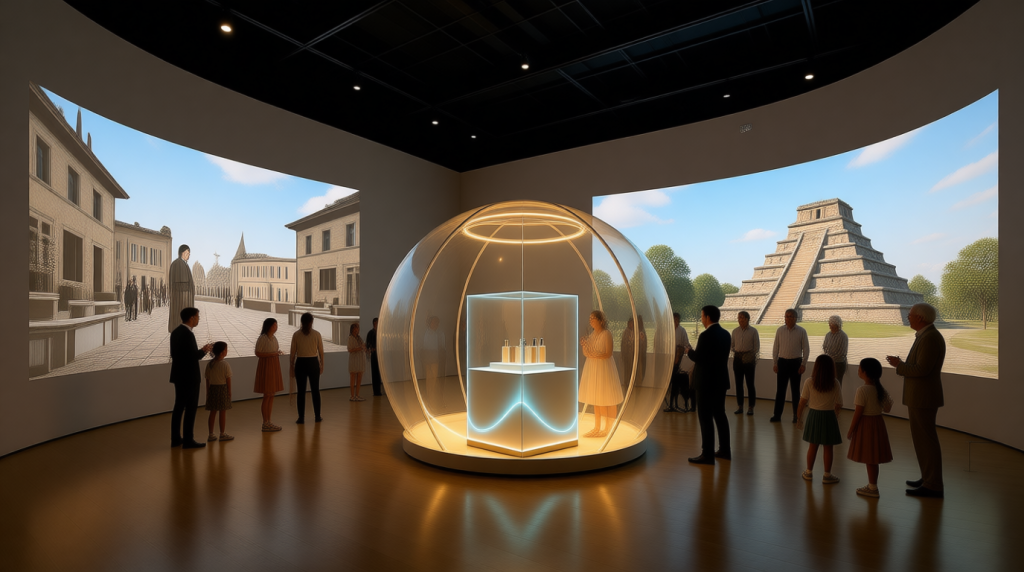
For museums, galleries, and cultural centers, immersive projection rooms offer a powerful way to bring history, science, and art to life—but unlike commercial or retail clients, these institutions prioritize longevity, accessibility, and educational integrity over flash. As a result, the immersive projection room cost structure is uniquely shaped by public funding cycles, conservation standards, and audience inclusivity.
Permanent installations in major museums typically range from $300,000 to over $1 million. This investment covers ultra-high-resolution laser projectors (to avoid UV damage to nearby artifacts), archival-grade content, ADA-compliant navigation, and robust thermal management for continuous operation. The Smithsonian, for instance, allocated $850,000 for an immersive wing that simulates deep-sea ecosystems—designed to run reliably for 10+ years with minimal maintenance.
Smaller or regional museums often adopt modular or semi-immersive solutions to stay within grant-based budgets. A curved 270° projection wall with pre-rendered historical narratives can be implemented for $120,000–$250,000, especially when using open-source software and collaborative content from academic partners.
Critically, content development is co-curated with historians, scientists, or artists, ensuring factual accuracy and cultural sensitivity. This collaborative process extends timelines but strengthens public trust—and funding eligibility. A single 10-minute educational experience can cost $50,000–$200,000, depending on animation complexity and research depth.
To help institutions plan effectively, here’s a comparative overview of immersive projection room cost models in the cultural sector:
| Museum Installation Type | Typical Cost Range | Key Features | Funding Sources | Lifespan |
|---|---|---|---|---|
| Flagship Immersive Wing | $500,000 – $1.2M+ | 360° projection, real-time interaction, climate control, multilingual audio | Government grants, private donors, endowments | 10–15 years |
| Permanent Exhibit Room | $200,000 – $500,000 | 270° projection, looped narrative, tactile interfaces | Institutional budgets, foundation grants | 7–10 years |
| Rotating Pop-Up Experience | $75,000 – $180,000 | Portable screens, templated software, reusable content | Corporate sponsorships, event grants | 1–3 years (reusable) |
| Educational Kiosk (Semi-Immersive) | $40,000 – $100,000 | Single-wall projection, touch interaction, curriculum-aligned | Education grants, local arts councils | 5–7 years |
Pro tip: Many museums reduce costs through consortium models—sharing content libraries or hardware specs with peer institutions. Others use hybrid projection/screen systems to cut projector count while maintaining immersion.
Ultimately, for cultural spaces, the ROI isn’t just financial—it’s measured in visitor engagement, educational impact, and community access. And in that light, even a $300,000 investment becomes a legacy asset.
Conclusion: Making Informed Decisions on Immersive Projection Room Cost
Investing in a commercial immersive projection room is no longer just about cutting-edge visuals—it’s a strategic decision that bridges technology, storytelling, and audience engagement. Whether you’re an event producer seeking viral moments, a retailer aiming to boost conversions, or a museum dedicated to immersive education, understanding the true immersive projection room cost is essential to aligning budget with impact.
As this guide has shown, prices vary dramatically based on permanence, scale, interactivity, and content depth—ranging from $50,000 for temporary retail activations to over $1 million for museum-grade installations. Yet across all sectors, one truth holds: the most successful projects prioritize purpose over spectacle. They ask not “How flashy can we go?” but “What experience do we want our audience to remember?”
With hardware becoming more reliable, software more accessible, and content tools more collaborative, 2025 marks a turning point—where immersive rooms shift from “luxury novelty” to “core experiential infrastructure.” By leveraging phased rollouts, shared content libraries, and smart partnerships, even mid-budget organizations can enter this space without overspending.
Before you commit, conduct a thorough needs assessment, request pilot demos from integrators, and always factor in long-term maintenance, content updates, and staff training. When done right, an immersive projection room doesn’t just cost money—it generates value, loyalty, and unforgettable human moments.
Ready to bring your vision to life—on budget and on brand?
Cebirra specializes in end-to-end immersive projection rooms for event venues, retail flagships, and cultural institutions. From concept to calibration, our team delivers transparent pricing, modular design, and ROI-driven storytelling—so you invest with confidence.