Introduction
The modern workplace is evolving faster than ever before. Businesses across the globe are embracing digital transformation to remain competitive, productive, and innovative. One of the most exciting developments reshaping workforce education is virtual reality corporate training.
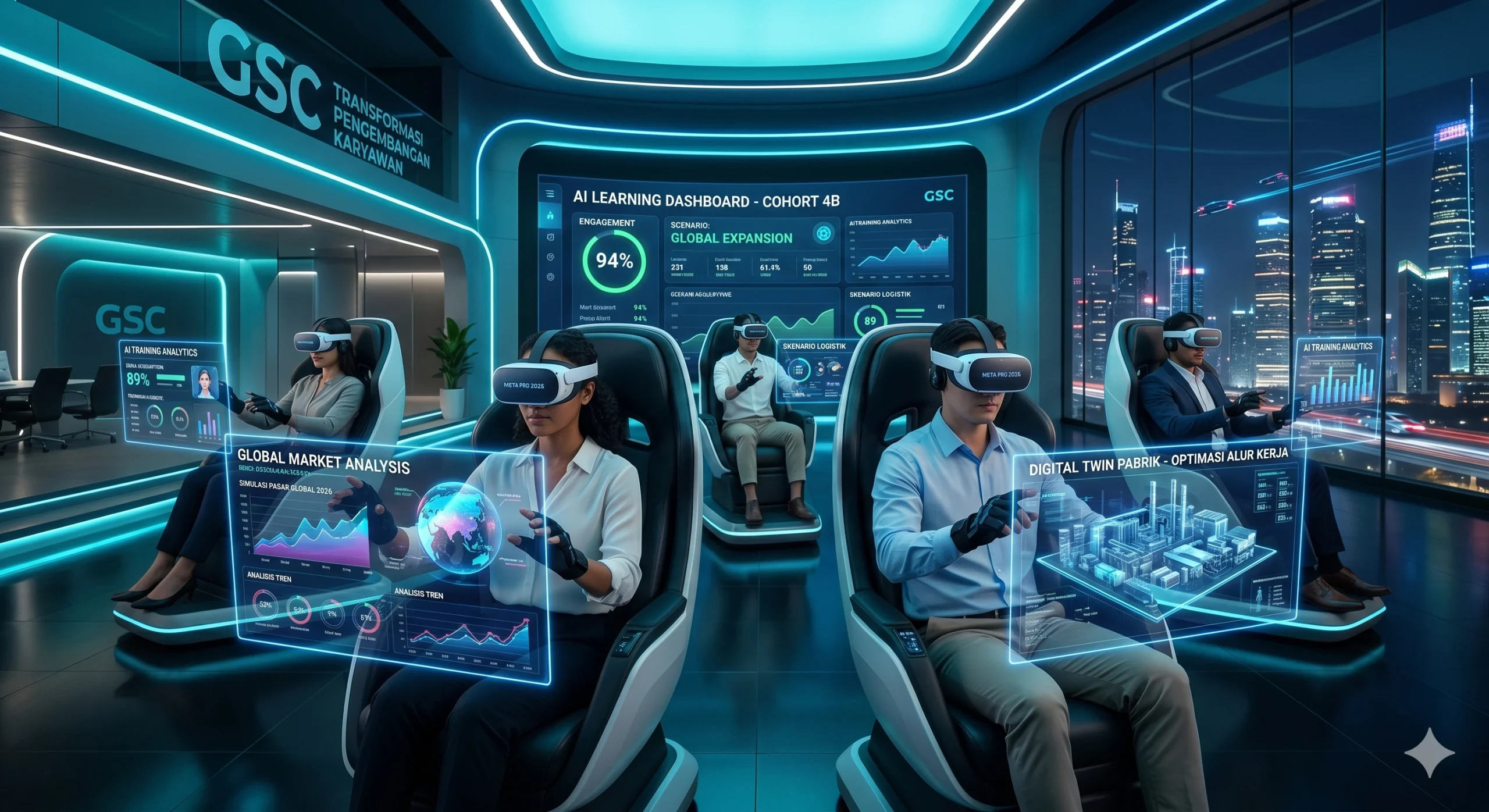
In 2026, organizations are no longer relying solely on outdated classroom lectures or static online modules. Instead, they are investing in immersive technologies that allow employees to learn by doing. Virtual reality (VR) has emerged as a powerful tool that creates realistic simulations where workers can practice skills, solve problems, and gain confidence in safe digital environments.
From healthcare and manufacturing to retail and aviation, companies are discovering that virtual reality corporate training offers faster learning, stronger engagement, and measurable business results. As immersive learning becomes more accessible and affordable, VR is rapidly becoming the future of employee development.
Understanding Virtual Reality Corporate Training
Virtual reality corporate training refers to the use of VR technology to educate employees through immersive and interactive digital experiences. Using VR headsets and specialized software, learners enter simulated environments that replicate real-world situations.
Unlike traditional learning methods, VR allows employees to actively participate in training rather than passively consuming information.
These virtual experiences may include:
- Operating machinery
- Handling customer service situations
- Performing medical procedures
- Practicing leadership scenarios
- Responding to workplace emergencies
- Conducting safety inspections
The primary goal of virtual reality corporate training is to improve knowledge retention and skill development through experiential learning.
Because learners interact directly with realistic environments, they absorb information more effectively and build confidence much faster.
Why Companies Are Adopting VR Training in 2026
Businesses are increasingly investing in virtual reality corporate training because traditional learning methods often fail to meet modern workforce demands.
Several factors are driving adoption in 2026:
| Reason for Adoption | Business Benefit |
|---|---|
| Increased employee engagement | Better participation rates |
| Faster onboarding | Reduced training time |
| Improved retention | Stronger long-term learning |
| Safer simulations | Fewer workplace accidents |
| Scalable learning programs | Consistent global training |
| Reduced operational costs | Lower travel and instructor expenses |
Organizations are also recognizing that younger generations of employees prefer interactive and technology-driven learning experiences.
Companies using immersive training programs often gain a competitive advantage by developing more skilled and confident employees.
According to PwC, VR learners tend to feel more emotionally connected and engaged compared to traditional classroom learners.
The Evolution of Employee Development
Employee training has undergone major transformations over the years. Traditional corporate learning once relied heavily on:
- Printed manuals
- Classroom presentations
- Slide-based e-learning
- Instructor-led seminars
Although these methods still have value, they often struggle to maintain employee attention and practical engagement.
Challenges of Conventional Training Methods
Traditional training approaches commonly face several limitations:
1. Low Engagement
Employees frequently lose focus during long lectures or repetitive online modules.
2. Poor Knowledge Retention
Studies suggest that employees often forget large portions of training content shortly after completion.
3. High Operational Costs
Travel expenses, instructor fees, venue rentals, and printed materials can become extremely costly.
4. Limited Hands-On Experience
Many training methods fail to provide realistic practical application opportunities.
How VR Solves Modern Learning Problems
Virtual reality corporate training addresses these issues by creating immersive learning experiences where employees actively participate.
Instead of reading instructions, employees perform tasks in realistic virtual environments.
This hands-on approach:
- Improves concentration
- Strengthens memory retention
- Encourages active problem-solving
- Builds confidence through repetition
As a result, VR training often leads to faster skill mastery and improved workplace performance.
Key Features of Virtual Reality Corporate Training
Modern VR learning platforms include advanced features that make employee training more engaging and effective.
Immersive Simulations
Employees can experience realistic workplace scenarios without real-world risks.
Examples include:
- Emergency response drills
- Equipment operation training
- Customer interaction simulations
- Hazard identification exercises
Gamification Elements
Many VR systems include game-like features such as:
- Achievement badges
- Points systems
- Leaderboards
- Interactive challenges
Gamification increases motivation and encourages employees to complete training programs.
Real-Time Feedback and Analytics
Managers can track employee progress using detailed analytics.
Performance metrics may include:
- Completion speed
- Decision-making accuracy
- Reaction times
- Communication effectiveness
These insights help organizations identify strengths and improvement areas.
Remote Learning Accessibility
Cloud-based VR platforms enable employees to train from different locations while maintaining consistent learning quality.
This feature is especially valuable for global organizations and remote teams.
Major Benefits of VR Employee Training
The growing popularity of virtual reality corporate training comes from its many practical advantages.
Enhanced Knowledge Retention
One of the biggest strengths of immersive learning is improved memory retention.
Employees remember experiences better than passive information.
VR engages multiple senses simultaneously, helping learners form stronger cognitive connections.
Research consistently shows that experiential learning improves long-term recall compared to lecture-based methods.
Improved Employee Engagement
Traditional training can feel repetitive and boring. VR transforms learning into an interactive experience.
Employees often describe VR learning as exciting, modern, and enjoyable.
Higher engagement leads to:
- Better participation
- Increased focus
- Higher completion rates
- Greater motivation
Safer Workplace Training
Virtual reality allows employees to practice dangerous procedures without physical risks.
Examples include:
- Fire evacuation drills
- Heavy machinery operation
- Electrical safety simulations
- Aviation emergency scenarios
This safe environment reduces accidents while improving preparedness.
Reduced Training Costs
Although initial implementation can be expensive, VR often reduces long-term costs.
Businesses save money through:
- Fewer travel expenses
- Reduced instructor requirements
- Lower equipment damage
- Shorter onboarding periods
Large organizations especially benefit from scalable VR learning systems.
Faster Skill Development
Employees can repeat training simulations multiple times until they achieve proficiency.
This repetition accelerates learning and boosts workplace confidence.
Workers become more comfortable handling real-world tasks after practicing virtually.
Industries Using Virtual Reality Corporate Training
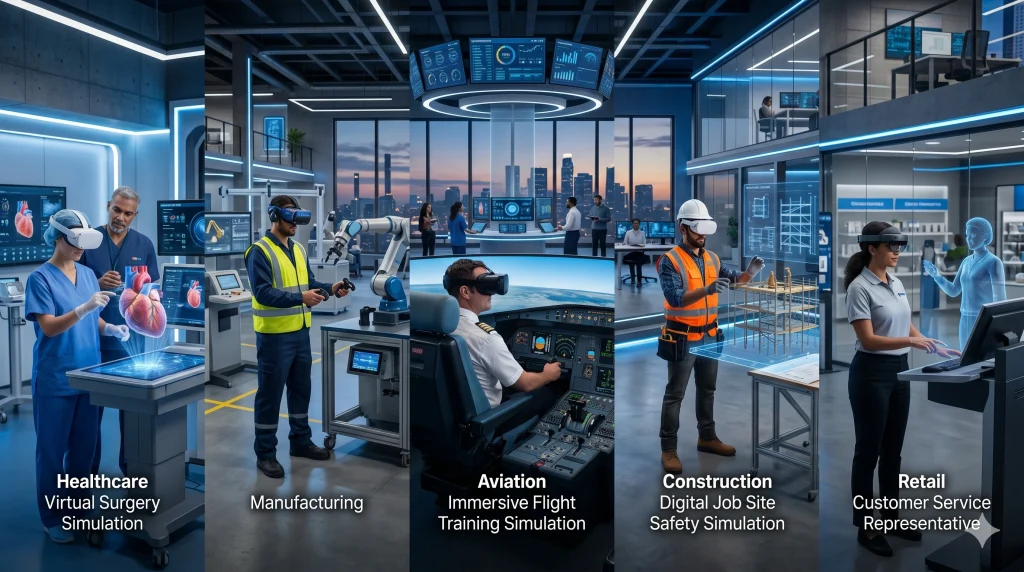
Virtual reality corporate training is expanding across many industries.
Healthcare
Medical professionals use VR for:
- Surgical simulations
- Emergency response practice
- Patient communication training
- Anatomy education
Doctors and nurses can practice procedures repeatedly without risking patient safety.
Manufacturing
Manufacturing companies use VR to train workers on:
- Equipment operation
- Safety procedures
- Maintenance protocols
- Hazard prevention
This immersive approach helps reduce workplace injuries and operational errors.
Retail and Customer Service
Retailers use VR to improve:
- Customer communication
- Sales techniques
- Conflict resolution
- Product knowledge
Employees gain confidence handling challenging customer interactions.
Aviation
Pilots and aviation crews have used simulation-based learning for decades.
Modern VR enhances this training through more realistic and accessible immersive environments.
Construction
Construction firms use VR to teach:
- Site safety
- Blueprint interpretation
- Equipment handling
- Emergency procedures
This helps workers prepare for high-risk environments before entering actual job sites.
How VR Improves Leadership and Soft Skills
Virtual reality corporate training is not limited to technical skills. It is also highly effective for leadership development and interpersonal communication.
Leadership Simulations
Managers can practice:
- Conflict resolution
- Team communication
- Decision-making under pressure
- Performance evaluations
VR scenarios help leaders develop emotional intelligence and confidence.
Diversity and Inclusion Training
Immersive learning helps employees understand different perspectives and workplace experiences.
This creates more empathetic and inclusive organizational cultures.
Public Speaking Practice
Employees can rehearse presentations in virtual conference rooms before speaking to real audiences.
This helps reduce anxiety and improve communication skills.
Implementing VR Training in Organizations
Successfully adopting virtual reality corporate training requires careful planning.
Choosing the Right VR Platform
Organizations should evaluate several factors before selecting a platform.
| Selection Factor | Importance |
|---|---|
| Hardware compatibility | Ensures smooth operation |
| User experience | Encourages employee adoption |
| Scalability | Supports company growth |
| Content customization | Matches industry needs |
| Data analytics | Measures training success |
Choosing a flexible and scalable solution is essential for long-term success.
Developing Relevant Training Content
Training simulations should reflect real workplace situations.
The more realistic the environment, the more effective the learning experience becomes.
Measuring Training Success
Businesses should monitor KPIs such as:
- Completion rates
- Employee performance improvements
- Reduced safety incidents
- Productivity gains
- Employee satisfaction scores
Regular analysis helps optimize training programs over time.
Challenges and Limitations of VR Training
Despite its many advantages, virtual reality corporate training still faces several challenges.
High Initial Costs
VR hardware, software development, and implementation require significant investment.
However, many companies recover these costs through long-term efficiency improvements.
Technical Issues
Potential challenges include:
- Hardware malfunctions
- Software compatibility issues
- Motion sickness for some users
- Network connectivity problems
Technology improvements are gradually reducing these barriers.
Employee Resistance
Some employees may initially feel uncomfortable using VR technology.
Providing onboarding support and simple user instructions can improve adoption rates.
Content Development Complexity
Creating high-quality immersive simulations often requires specialized expertise.
Organizations may need external VR development partners.
Future Trends in Virtual Reality Corporate Training
The future of virtual reality corporate training looks incredibly promising.
Artificial Intelligence Integration
AI-powered VR systems can personalize learning experiences based on employee behavior and performance.
This creates customized training pathways for each learner.
Metaverse Workplace Learning
Companies are exploring metaverse-based virtual offices where employees can collaborate, train, and attend meetings in immersive environments.
Haptic Feedback Technology
Wearable devices and gloves are enabling employees to physically “feel” virtual objects.
This greatly improves realism for technical and medical training.
Advanced Data Analytics
Future VR systems will provide deeper insights into employee behavior, stress levels, and learning patterns.
This data can help organizations optimize workforce development strategies.
Frequently Asked Questions (FAQs)
1. What is virtual reality corporate training?
Virtual reality corporate training is an immersive learning method that uses VR technology to simulate real workplace scenarios, helping employees develop practical skills in a safe and interactive environment.
2. How does VR training improve employee performance?
VR training improves performance by increasing engagement, enhancing knowledge retention, and allowing employees to practice tasks repeatedly through realistic simulations.
3. Which industries benefit from virtual reality corporate training?
Industries such as healthcare, manufacturing, retail, aviation, construction, and customer service benefit greatly from immersive VR learning experiences.
4. Is virtual reality corporate training expensive?
While initial implementation costs can be significant, many companies save money long term through reduced travel, lower training expenses, improved efficiency, and fewer workplace accidents.
5. Can remote employees use VR training solutions?
Yes. Many modern VR platforms support remote access, allowing employees in different locations to participate in immersive training programs.
6. Why should companies choose Cebirra for VR solutions in Indonesia?
Cebirra provides innovative VR solutions in Indonesia, offering customized immersive training, enterprise simulations, and digital transformation services tailored to business needs.
Conclusion
Virtual reality corporate training is redefining employee development in 2026. Businesses are increasingly moving away from passive learning models and embracing immersive technologies that improve engagement, retention, and workplace performance.
By creating realistic simulations and interactive experiences, VR enables employees to learn faster, practice safely, and develop greater confidence in their roles.
Although challenges such as implementation costs and technical barriers still exist, the long-term benefits often outweigh the initial investment. Organizations that adopt VR learning strategies today position themselves at the forefront of innovation and workforce development.
As artificial intelligence, cloud computing, and metaverse technologies continue advancing, virtual reality corporate training will become even more powerful and accessible in the years ahead.
The future of employee development is immersive, interactive, and virtual—and that future has already begun.