INTRODUCTION
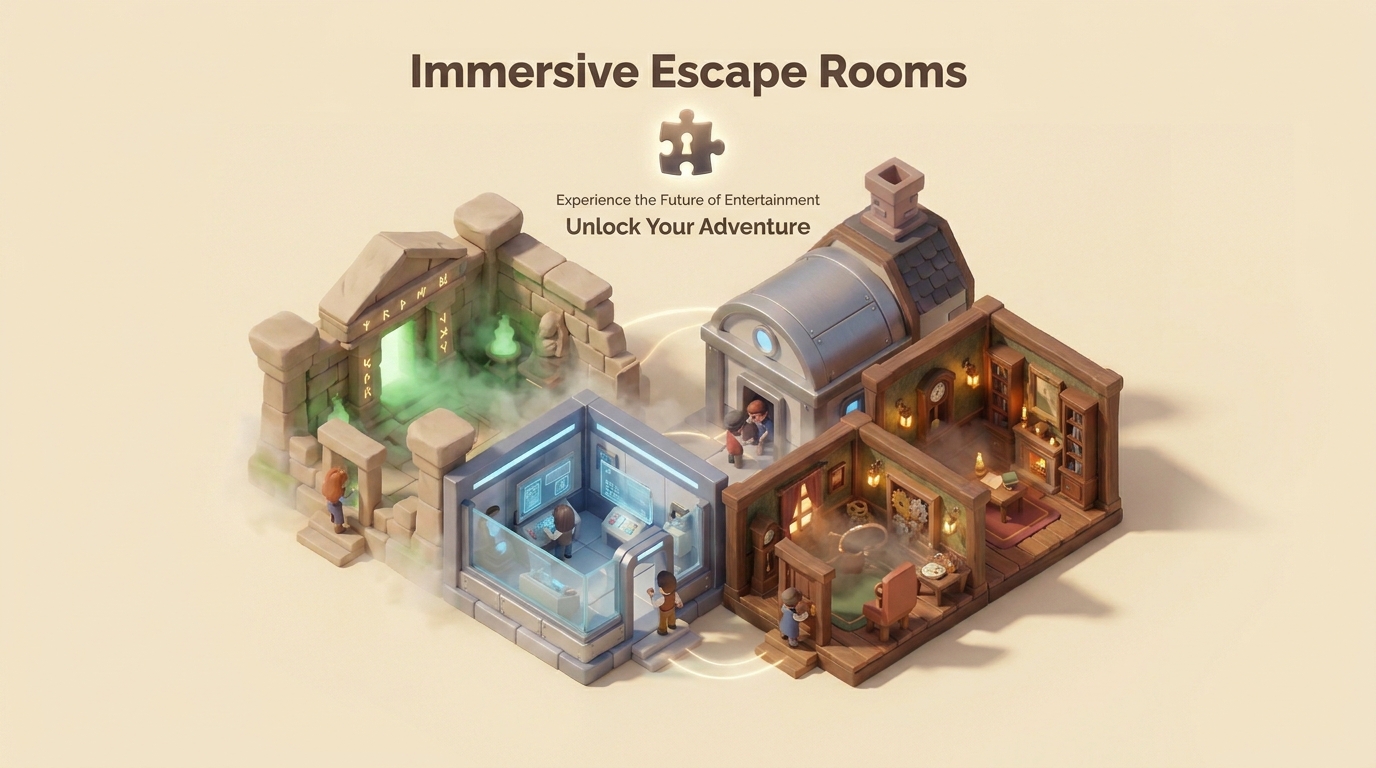
Escape rooms have become one of the most popular forms of entertainment worldwide. What began as a simple puzzle game has transformed into immersive live experiences that transport players into entirely different worlds. Today’s escape rooms are far more than just solving puzzles in a locked room—they’re adventures where you become part of the story.
Immersive escape rooms combine several elements to create a believable experience. You’ll find detailed set designs, atmospheric lighting and sound, challenging puzzles, and often actors who interact with you during the game. Whether you’re solving a mystery, surviving a thriller, or exploring a fantasy world, the goal is to make you feel like you’re truly inside that experience.
These experiences appeal to many different groups. Friends gather for fun nights out, families bond over shared challenges, and companies use escape rooms for team-building activities. As the industry continues to grow and innovate, escape rooms are becoming an increasingly important part of entertainment and corporate culture.
The Evolution of Escape Rooms: From Concept to Immersive Phenomenon
How It All Started
The escape room concept emerged in the early 2010s, inspired by video game room-escape games played online. The first physical escape room opened in Budapest, Hungary, in 2011, and the idea quickly spread across Asia, Europe, and North America. Early escape rooms were simple—players entered a single room filled with puzzles, locks, and hidden clues. The goal was straightforward: solve the puzzles and find the key to escape within 60 minutes.
These early versions were fun but basic. The environments were often just ordinary rooms with generic decorations. The puzzles focused on logic and pattern recognition rather than storytelling. Players enjoyed the novelty and challenge, but there was little that made each experience feel unique or memorable beyond the puzzle-solving aspect.
The Transition to Immersion
As the industry matured, escape room creators realized that simple puzzles weren’t enough to keep players coming back. They began investing in better set design, more compelling narratives, and enhanced atmospherics. Designers started thinking like filmmakers, creating entire worlds for players to explore. This shift marked the beginning of true immersion.
Immersive escape rooms introduced theatrical elements that made the experience feel cinematic. High-quality props, professional lighting design, and carefully curated soundtracks transformed ordinary spaces into believable alternate realities. Some rooms added actor guides or characters who interacted with players, deepening the narrative experience. The puzzles themselves became more creative and integrated into the story rather than feeling like standalone challenges.
Evolution Timeline: Key Milestones
Here’s how escape rooms have evolved over the past 15 years:
| Year/Period | Development | Impact |
|---|---|---|
| 2011 | First physical escape room opens in Budapest | Escape room concept becomes real-world entertainment |
| 2012-2013 | Rapid expansion across Asia and Europe | Industry gains global recognition |
| 2014-2015 | Immersive design and theming introduced | Player experiences become more engaging and memorable |
| 2016-2017 | Technology integration begins (VR, AR, digital puzzles) | Escape rooms become high-tech experiences |
| 2018-2019 | Professional actors and live storytelling become standard | Narrative-driven experiences dominate the market |
| 2020-2021 | Virtual and hybrid escape rooms emerge | Industry adapts to new circumstances and preferences |
| 2022-2026 | AI and advanced tech integration; luxury experiences | Escape rooms compete with mainstream entertainment |
Why Immersion Became Essential
The shift toward immersion wasn’t just about making things look prettier. Players wanted to feel like they were genuinely part of a story, not just solving puzzles in a themed room. Immersive design creates emotional investment. When you believe you’re a detective solving a real crime or an explorer uncovering ancient secrets, the experience becomes personal and memorable.
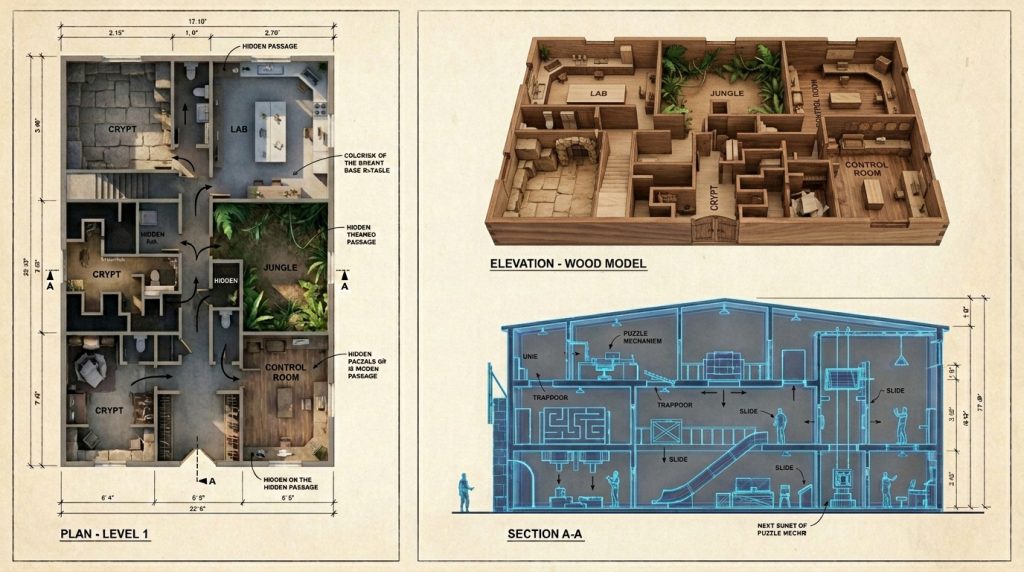
Today’s immersive escape rooms are a far cry from their humble beginnings. They’ve evolved into sophisticated entertainment experiences that rival theme park attractions in their complexity and attention to detail. Rooms now feature multiple levels, interconnected spaces, and narratives that span entire locations. Some premium escape room experiences cost hundreds of dollars per team because of the production value and creativity involved.
This evolution continues. The escape room industry is constantly pushing boundaries, introducing new technologies, and exploring innovative storytelling techniques. What started as a simple puzzle game has become a legitimate form of entertainment that attracts millions of players annually and generates billions in revenue worldwide.
What Makes an Escape Room Truly Immersive: Key Elements and Design
The Foundation of Immersion
True immersion in an escape room goes beyond decoration. It’s about creating a complete sensory experience that makes players forget they’re in a game. Immersive design requires careful attention to every detail—from the moment you enter the room to the final puzzle you solve. When all elements work together seamlessly, players become fully absorbed in the experience and lose track of time and reality.
The most immersive escape rooms share common characteristics. They have compelling narratives that give context to every puzzle. They feature authentic set designs with realistic props and environments. They use atmospheric sound and lighting to enhance mood and tension. And they often include human interaction through actors or guides who bring the story to life. Together, these elements create an experience that feels genuinely real.
Core Elements of Immersive Design
| Element | Description | Purpose |
|---|---|---|
| Narrative/Story | A compelling plot that explains why you’re in the room and what you need to accomplish | Creates emotional investment and context for puzzles |
| Set Design | Detailed, authentic environments with realistic props and decor | Makes the world feel believable and real |
| Lighting Design | Strategic use of color, brightness, and shadow | Enhances mood, guides attention, and builds atmosphere |
| Sound Design | Background music, sound effects, and audio cues | Creates immersion and emotional response |
| Puzzle Integration | Challenges that fit naturally into the story | Prevents players from feeling like they’re just solving random puzzles |
| Actor Interaction | Live characters who guide, challenge, or surprise players | Adds human connection and unpredictability to the experience |
| Pacing and Flow | Careful sequencing of challenges and revelations | Maintains tension, prevents frustration, and keeps engagement high |
Storytelling: The Heart of Immersion
A great escape room story does more than provide context—it creates an emotional journey. The best narratives draw players in immediately with a compelling premise. You might be a detective investigating a crime, a survivor in a post-apocalyptic world, or an archaeologist exploring a cursed tomb. The story should make you feel like your actions matter and that solving puzzles has real consequences within the game world.
Effective storytelling in escape rooms uses multiple layers. The main narrative arc provides the overall goal. Side stories and character backgrounds add depth. Environmental details tell mini-stories through props, documents, and clues. When a story is well-crafted, every element of the room reinforces the narrative, making the experience feel cohesive and meaningful.
Environmental Design and Aesthetics
The physical space is where immersion truly comes alive. Professional escape room designers invest heavily in authentic set construction. A murder mystery room might feature a realistic 1920s office complete with period furniture, vintage typewriters, and authentic documents. A haunted hospital room includes real medical equipment, peeling wallpaper, and unsettling medical records. A space station features metallic walls, control panels, and futuristic technology.
Every prop serves a purpose. Nothing is random. Details matter because they train your brain to believe in the world. When you see authentic period furniture, genuine-looking documents, and realistic environmental decay, your mind accepts that you’re truly in that place and time. This psychological acceptance is crucial to immersion.
Sensory Experiences: Sound and Light
Lighting and sound create the emotional backbone of immersive experiences. A well-designed soundscape uses ambient music to set mood, sound effects to guide attention, and audio cues to create tension or excitement. Some rooms use spatial audio where sounds appear to come from different directions, making the environment feel three-dimensional and alive.
Lighting design similarly controls how you feel and where you focus. Dim, shadowy lighting creates suspense in a horror-themed room. Bright, clinical lighting builds tension in a sci-fi escape. Color psychology plays a role too—cool blues and greens feel calm or eerie, while warm oranges and reds create excitement or danger. Together, sound and lighting transform a simple room into an immersive world.
The Role of Actors and Live Interaction
Some of the most memorable escape room experiences include actors who interact with players. These performers might be game masters who explain the rules and monitor progress, or they might be characters within the story who surprise you, challenge you, or help you at critical moments. Live actors add unpredictability and human connection that technology alone cannot provide.
Good actors understand how to enhance immersion without breaking character. They respond authentically to player confusion or excitement. They can adjust the difficulty in real-time if a team is struggling. They create memorable moments through performance, dialogue, and unexpected interactions. The presence of a skilled actor transforms an escape room from a puzzle-solving activity into a theatrical experience.
The Technology Behind Immersive Escape Rooms: Digital Integration and Innovation
Technology is Changing Escape Rooms
Modern escape rooms are using advanced technology to create better experiences. A few years ago, escape rooms were mostly about physical puzzles—locks, keys, and hidden objects. Today, technology plays a big role in making games more engaging, challenging, and immersive. From simple digital locks to advanced virtual reality, technology is transforming how escape rooms work.
Technology doesn’t replace the physical experience—it enhances it. Players still touch real objects, explore physical spaces, and interact with actors. But now they might also solve digital puzzles, use virtual reality headsets, or trigger special effects with motion sensors. The combination of real and digital creates experiences that wouldn’t be possible with either alone.
Types of Technology Used in Escape Rooms
| Technology | How It’s Used | Impact on Experience |
|---|---|---|
| Digital Locks and Keypads | Replace traditional locks with electronic codes and passwords | Makes puzzles more complex and interactive |
| Motion Sensors | Detect when players enter areas or touch objects | Triggers surprises, special effects, and story elements |
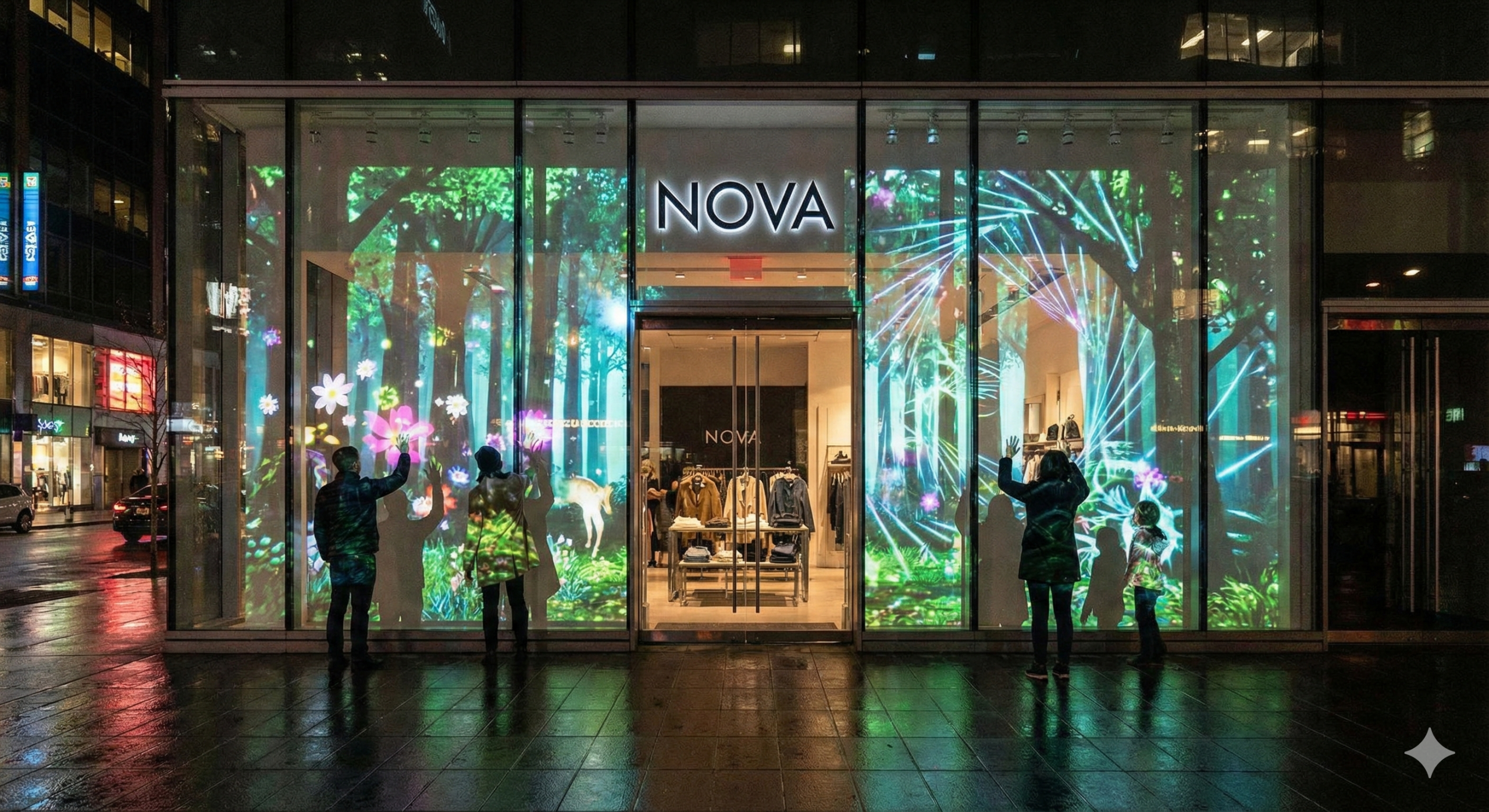
| Projection Mapping | Projects images and video onto walls and objects | Creates dynamic visual environments that change throughout the game |
| Virtual Reality (VR) | Immerses players in a completely digital world | Allows impossible scenarios and unlimited creativity |
| Augmented Reality (AR) | Overlays digital information on the real world | Reveals hidden clues and adds interactive elements to physical objects |
| Sound Systems | Uses spatial audio and directional speakers | Creates three-dimensional soundscapes that feel immersive |
| Automated Lighting | Changes color, brightness, and effects automatically | Responds to gameplay and enhances atmosphere |
| Interactive Displays | Touchscreen puzzles, video messages, and digital maps | Makes technology feel natural and integrated into the story |
Digital Puzzles and Interactive Locks
Gone are the days when every puzzle involved finding a hidden key. Now, many escape rooms feature digital puzzles that require players to input codes, solve equations on touchscreens, or interact with computer systems. These puzzles can be more complex and engaging than traditional locks because they can provide feedback, hints, and multiple layers of challenge.
Electronic locks have several advantages. They can be programmed to unlock only after specific steps are completed. They can give hints if a team is stuck. They can track progress and adjust difficulty in real-time. They also add a modern, tech-forward feel to rooms, which appeals to players who enjoy contemporary experiences.
Special Effects and Automation
Technology enables escape room designers to create dramatic moments that would be impossible otherwise. Motion sensors can trigger sudden lighting changes, sounds, or even physical effects like water sprays or fog. Automated doors might lock or unlock at specific times. Projection mapping can transform a blank wall into a completely different environment in seconds.
These effects create memorable surprises that deepen immersion. Imagine solving a puzzle and suddenly the lights go out, a alarm sounds, and a wall of fire appears on the projection screen. The sensory overload makes the moment unforgettable. When used well, special effects enhance storytelling and emotional impact.
Virtual Reality and Augmented Reality
Some cutting-edge escape rooms now incorporate virtual reality. Players put on VR headsets and enter completely digital worlds. This allows for scenarios impossible in physical spaces—flying through space, exploring underwater cities, or visiting ancient civilizations. VR escape rooms offer unlimited creative possibilities.
Augmented reality takes a different approach. Instead of replacing the real world, AR overlays digital information on top of physical spaces. You might point a tablet at a wall and see hidden clues appear. You could put on AR glasses and see interactive symbols floating above real objects. AR keeps players connected to the physical escape room while adding digital layers of information and interaction.
The Future of Technology in Escape Rooms
New technologies continue to emerge. Artificial intelligence is being used to create smarter game masters that can interact with players naturally. Haptic technology—which creates physical sensations through vibration—is being tested to add touch-based feedback. Voice recognition allows rooms to respond to spoken commands. Biometric sensors can track player stress levels and adjust difficulty accordingly.
The trend is clear: escape rooms will become increasingly technologically sophisticated. However, the best designers understand that technology should enhance the human experience, not replace it. The most immersive escape rooms balance cutting-edge tech with authentic storytelling, realistic sets, and human interaction
The Psychology of Immersion: Why Our Brains Love Escape Room Challenges
Why Escape Rooms Are So Addictive
Escape rooms tap into basic human needs and desires. Our brains are naturally drawn to puzzles, challenges, and stories. When you combine these with time pressure and teamwork, you create an experience that feels incredibly rewarding. Understanding why escape rooms are so appealing helps explain their popularity.
Psychologically, escape rooms work because they engage multiple parts of our brains simultaneously. You’re solving problems, working with others, managing stress, and experiencing a story. This combination creates a powerful emotional experience that keeps people coming back.
Key Psychological Principles
| Principle | Why It Matters | How Escape Rooms Use It |
|---|---|---|
| Problem-Solving | Our brains enjoy solving puzzles and finding solutions | Puzzles provide constant mental challenges |
| Time Pressure | Urgency creates excitement and focus | The 60-minute limit makes the game feel intense |
| Achievement | Completing difficult tasks feels rewarding | Escaping the room provides a sense of accomplishment |
| Teamwork | Working together strengthens bonds and trust | Players must communicate and collaborate to succeed |
| Narrative Engagement | Stories capture our imagination and emotions | A compelling plot makes the experience meaningful |
| Flow State | Being fully absorbed in an activity feels amazing | The right difficulty level keeps players engaged |
| Novelty | New experiences excite our brains | Each escape room offers a unique world to explore |
The Power of Problem-Solving
Humans are natural problem-solvers. Our brains evolved to figure things out, overcome obstacles, and find solutions. Escape rooms satisfy this fundamental drive. Every puzzle you solve releases dopamine—a chemical that makes you feel good. This is why solving even a simple puzzle in an escape room feels satisfying.
The best escape rooms balance difficulty carefully. If puzzles are too easy, your brain gets bored. If they’re too hard, you get frustrated. The ideal is a challenge that requires effort but is solvable with teamwork and thinking. This creates a state called “flow”—where you’re completely absorbed and time disappears. Flow is highly addictive and keeps players engaged from start to finish.
Time Pressure and Stress
The 60-minute countdown creates urgency. This time limit might sound stressful, but it actually enhances enjoyment. The pressure forces you to focus completely on the task at hand. You can’t think about work problems or distractions—you’re fully present in the moment. This intense focus itself feels rewarding.
Interestingly, moderate stress during escape rooms is enjoyable rather than unpleasant. The stress comes with a sense of safety—you know it’s just a game. This combination of excitement and safety is psychologically powerful. Your body releases adrenaline, but your mind knows there’s no real danger. This creates a thrilling but safe experience.
The Social and Emotional Benefits
Escape rooms are social experiences, and teamwork plays a crucial role in their appeal. Working together toward a shared goal strengthens relationships and builds trust. You see how teammates think, how they handle pressure, and how they collaborate. Many teams report feeling closer after an escape room experience.
Succeeding together also creates a shared sense of accomplishment. When your team escapes, you all celebrate together. This collective success creates lasting memories and stronger bonds. Even losing together can be fun if the experience was enjoyable. The shared adventure matters more than the outcome.
Narrative and Immersion
Our brains are wired to respond to stories. A good narrative engages us emotionally and makes us care about outcomes. In escape rooms, the story gives meaning to your actions. You’re not just solving random puzzles—you’re solving puzzles to escape a haunted house or save someone from danger. This context transforms the experience from a game into an adventure.
When you’re immersed in a compelling story, your brain treats it almost like reality. You experience genuine emotions—fear in a horror room, excitement in an action room, curiosity in a mystery room. This emotional engagement is what makes immersive escape rooms so memorable and rewarding.
The Rewards Keep Coming
Every stage of an escape room provides psychological rewards. Discovering a hidden clue feels like success. Solving a puzzle provides satisfaction. Finding a new area to explore creates excitement. Reaching the halfway point gives a sense of progress. Escaping provides ultimate achievement. These constant small rewards keep your brain engaged and motivated throughout the entire experience.
The Future of Live Immersive Entertainment: Trends and What’s Coming Next
The Escape Room Industry is Growing Fast
The escape room industry is booming. What started as a niche entertainment in 2011 has grown into a global industry worth billions of dollars. New escape room venues open every day around the world. Players are becoming more experienced and demanding better, more creative experiences. This growth is driving innovation and pushing escape rooms in exciting new directions.
The future of immersive entertainment looks bright. Escape rooms are expanding beyond traditional formats. Companies are combining escape rooms with other entertainment, creating hybrid experiences. Technology continues to advance, offering new possibilities. Player expectations are rising, inspiring designers to be more creative. Understanding these trends helps explain where the industry is headed.
Major Trends Shaping the Future
| Trend | What It Means | Impact on Players |
|---|---|---|
| Hybrid Experiences | Combining escape rooms with other entertainment forms | More diverse and complex experiences |
| Luxury and Premium Rooms | High-end experiences with larger budgets and production value | Better quality, more memorable experiences |
| Outdoor and Large-Scale Games | Escape room concepts in outdoor spaces and city-wide hunts | New ways to explore immersive entertainment |
| AI and Smart Technology | Artificial intelligence making games more responsive and adaptive | Personalized experiences that adjust to player skill |
| Narrative-Driven Campaigns | Multi-room stories that span across locations and sessions | Deeper storytelling and character development |
| Virtual and Hybrid Models | Online escape rooms combined with physical experiences | More accessible options for different preferences |
| Corporate Integration | Escape rooms becoming standard team-building tools | Wider audience and more business applications |
| Accessibility Features | Designing rooms for players with different abilities | Inclusive experiences for everyone |
Hybrid Entertainment Experiences
Escape rooms are increasingly combining with other forms of entertainment. Some venues blend escape rooms with dinner experiences—you solve puzzles between courses at a restaurant. Others combine escape rooms with murder mystery theater, where actors perform scenes and you solve crimes. Some create escape room experiences that incorporate live music or comedy performances.
These hybrid experiences appeal to audiences who want something more than just puzzles. They create longer, more immersive adventures that feel like complete entertainment events. A three-hour escape room dinner experience is more memorable than a standard 60-minute game. As these hybrids become more popular, the line between escape rooms and other entertainment forms will continue to blur.
Premium and Luxury Escape Rooms
High-end escape room venues are becoming more common. These premium experiences feature larger budgets, professional actors, elaborate sets, and cutting-edge technology. Some charge $100 or more per person because of their production quality and creativity. These luxury rooms compete directly with theme parks and theater productions.
Luxury escape rooms often feature multiple connected rooms, longer playtimes (90 minutes to 2 hours), and professional-quality storytelling. They invest in custom-built sets, original soundtracks, and skilled performers. The experience feels more like participating in a film or stage production than solving puzzles in a game. As more players experience these premium options, they raise industry standards and inspire other venues to improve their offerings.
Outdoor and City-Wide Adventures
Escape rooms are breaking out of physical rooms. Some companies now offer outdoor escape room experiences where you solve puzzles across an entire city block or park. Others create city-wide treasure hunts where participants navigate through public spaces following clues. These outdoor experiences use real environments instead of themed rooms.
Outdoor games add an entirely new dimension to immersive entertainment. Instead of being confined to a single space, you’re exploring the real world while playing a game. The scale and scope can be much larger. Technology like GPS, mobile apps, and augmented reality makes these outdoor experiences possible and engaging.
Artificial Intelligence and Adaptive Gameplay
Future escape rooms will likely use artificial intelligence to create more responsive, personalized experiences. AI-powered game masters could monitor player progress and adjust difficulty in real-time. They could provide hints automatically when needed or increase challenge when players are doing too well. They could even generate conversations with AI characters that feel natural and engaging.
Adaptive gameplay means each team gets a customized experience. The game learns from how you play and adjusts accordingly. This technology could make escape rooms more accessible to beginners while still challenging experienced players. It also creates unique experiences—no two teams would have exactly the same game.
Deeper Storytelling and Campaigns
The narrative depth of escape rooms will likely increase. Instead of standalone 60-minute games, designers will create multi-room experiences with complex storylines. Some venues might offer campaign-style adventures where you return multiple times to continue a story. Your choices in one session could affect future sessions, creating personalized narrative paths.
This deeper storytelling approach treats escape rooms more like immersive theater or interactive novels. Players become invested in characters and long-term plots. The emotional impact increases when you’ve spent multiple hours with a story rather than just one hour. This evolution could attract audiences who care more about narrative than puzzle-solving.
Making Escape Rooms More Accessible
The industry is recognizing the importance of accessibility. More rooms are being designed for players with disabilities—wheelchair-accessible spaces, puzzles that don’t rely solely on vision or hearing, and accommodations for different mobility levels. Some companies offer sensory-friendly versions of their rooms for people with sensory sensitivities.
This trend toward inclusion expands the audience for escape rooms. When games are designed to accommodate everyone, more people can participate and enjoy the experience. As accessibility becomes standard, escape rooms will become truly universal entertainment rather than experiences limited to certain player types.
The Bottom Line: Escape Rooms Are Here to Stay
Escape rooms have evolved from a novelty into a legitimate form of entertainment. The industry shows no signs of slowing down. With new technology, creative storytelling, and expanding formats, the future promises even more innovative and immersive experiences. Whether you’re a casual player looking for a fun night out or a serious enthusiast seeking the ultimate challenge, the escape room industry will continue to deliver exciting new adventures for years to come.
CONCLUSION
The Future of Entertainment is Here
Immersive escape room experiences have revolutionized entertainment in just over a decade. What began as simple puzzle games has evolved into sophisticated, multi-sensory adventures that engage millions of players worldwide. These experiences combine storytelling, design, technology, and human interaction to create something truly special—moments where players forget about the outside world and become fully absorbed in an alternate reality.
Why Immersive Escape Rooms Matter
The success of immersive escape rooms comes from their unique ability to satisfy fundamental human needs. We love solving problems, working as a team, experiencing stories, and achieving goals. Escape rooms deliver all of these in one engaging package. They provide genuine connection, real accomplishment, and lasting memories that keep players coming back for more.
As the industry continues to grow and innovate, escape rooms will become even more sophisticated. Advanced technology, deeper storytelling, premium experiences, and greater accessibility will shape the future of this entertainment form. Whether through artificial intelligence, outdoor adventures, or hybrid experiences combining multiple entertainment types, escape rooms will continue to push creative boundaries.
Ready to Create Your Immersive Experience?
The immersive escape room phenomenon isn’t just a passing trend—it’s a fundamental shift in how people seek entertainment and connection. If you’re a business owner, entrepreneur, or entertainment enthusiast looking to build your own immersive escape room experience, the time is now. The demand is higher than ever, and players are seeking unique, unforgettable adventures.
Partner with Cebirra to design and build your immersive escape room experience. Cebirra specializes in creating world-class, fully immersive escape room environments that captivate players and keep them coming back. From concept development and narrative design to cutting-edge technology integration and professional set construction, Cebirra brings your vision to life.
Whether you’re starting from scratch or upgrading an existing venue, Cebirra’s expert team understands what makes escape rooms truly immersive. They combine creative storytelling, stunning design, advanced technology, and flawless execution to deliver experiences that exceed player expectations and generate consistent revenue.
Don’t just offer an escape room—offer an adventure. Contact Cebirra today to learn how they can transform your space into an immersive entertainment destination that will define your market. Your next unforgettable experience is just one conversation away.
Frequently Asked Questions
What is an immersive escape room?
An immersive escape room is a live entertainment experience where players enter a themed environment and solve puzzles to escape within 60 minutes. It features realistic set designs, compelling stories, professional actors, and atmospheric lighting and sound to create a believable alternate reality.
How long does an immersive escape room last?
Most escape rooms last 60 minutes. Premium versions offer 90 minutes to 2 hours. Some venues combine escape rooms with dining or other entertainment for 2-4 hour experiences.
What makes an escape room immersive?
A compelling story, realistic set design, professional lighting and sound, puzzles integrated into the narrative, and live actors all work together to make you feel like you’re truly in another world.
What technology is used in escape rooms?
Modern escape rooms use digital locks, motion sensors, projection mapping, virtual reality, augmented reality, spatial audio, automated lighting, and interactive displays to enhance the experience.
Are escape rooms good for team building?
Yes. Escape rooms require communication, collaboration, and problem-solving. Teams must work together to succeed, which strengthens bonds and improves workplace relationships.
What’s the future of escape rooms?
The industry is growing with hybrid experiences, luxury premium rooms, outdoor adventures, AI technology, deeper stories, virtual options, and better accessibility features for all players.
How do I build an escape room business?
Building an escape room business requires expertise in design, puzzles, and technology. Many entrepreneurs partner with specialized companies like Cebirra that provide complete services from concept to launch.
Why choose Cebirra for escape rooms?
Cebirra specializes in designing world-class immersive escape rooms. They offer complete services including storytelling, set design, technology integration, and professional execution to create unforgettable experiences.