Introduction
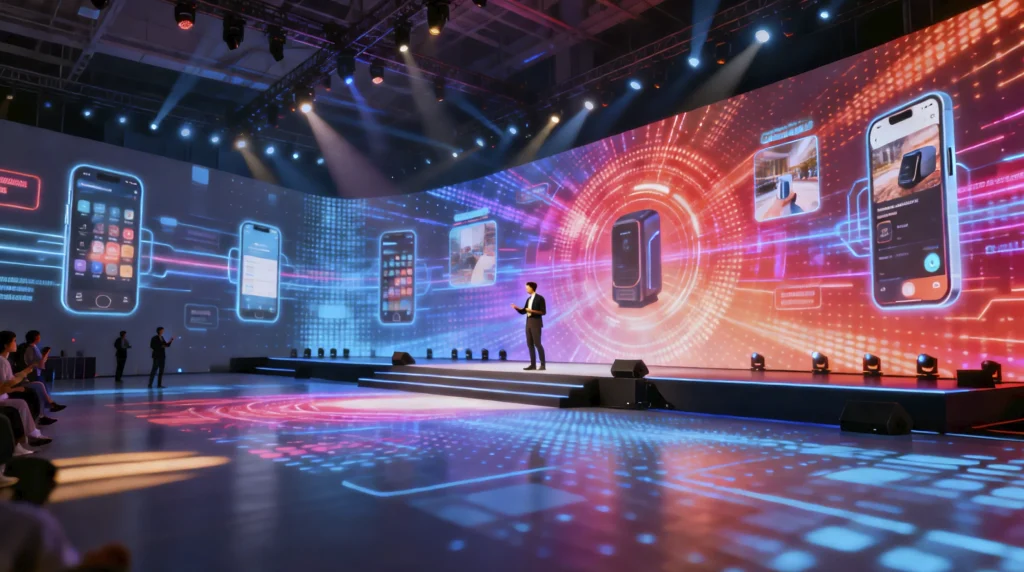
By 2026, the visual aspect of events has reached a whole new level. It’s no longer just a backdrop, it’s the main attraction – the centrepiece of these immersive experiences. Large concert events, brand launches, architectural installations and corporate events are all using visual technology to create an unforgettable experience. The choice of which tech to go for is between two heavy-hitters: LED walls and projection mapping. Both of these technologies can deliver stunning visuals that grab your attention, tell a story and get people involved. Yet they’re fundamentally different and work best in different situations.
LED walls have come on leaps and bounds – their displays are super bright, resolution is top-notch and they work with pretty much any lighting you throw at them, making them the go to choice for modern event production. Projection mapping does something entirely different – it turns real world surfaces into digital canvases, blending your digital content with the surroundings to create some seriously mind-bending visuals and a more immersive experience. As tech gets better and costs change, the decision between these two is getting more important than ever.
This guide is going to delve into how each technology works, compare their performance, break down the costs and logistics and lay out where each one really shines. Whether youre an event planner, brand strategist or a production pro, understanding what LED walls and projection mapping can offer will help you pick the right visual solution for your goals in 2026 and way, way beyond.
Understanding the Technologies
LED walls and projection mapping both create large, eye-catching visuals — but they do it in completely different ways. Think of it as screen vs light illusion.
LED Walls — A Giant Digital Screen
An LED wall is basically a huge TV made from many small panels joined together. Each tiny light on the panels creates part of the image, so the screen produces its own brightness and color.
What this means in practice:
- Very bright and clear visuals
- Works indoors and outdoors
- Easy for audiences to see even in daylight
- Can be built in many sizes and shapes
- Reliable and consistent image quality
Because LED walls create their own light, they don’t depend on the environment around them.
Projection Mapping — Turning Surfaces Into Displays
Projection mapping uses projectors to shine images onto real objects like buildings, stages, or walls. Instead of using a screen, it makes physical surfaces appear animated or transformed.
What this means in practice:
- Can make objects look like they move or change shape
- Creates immersive, artistic experiences
- Works best in dark or controlled lighting
- Uses the environment as part of the visual design
- More dependent on setup and surface quality
Projection mapping doesn’t create a display — it uses light to change how things look.
The Simple Difference
- LED walls = a powerful screen you install
- Projection mapping = visuals projected onto real-world surfaces
Both technologies are popular because they serve different goals. LED walls focus on clarity and visibility. Projection mapping focuses on transformation and visual storytelling.
Visual Performance Comparison
LED walls and projection mapping can both look spectacular, but their performance depends heavily on environment and purpose. Here’s a clear side-by-side comparison of how they behave in real-world conditions.
Side-by-Side Visual Performance
| Feature | LED Walls | Projection Mapping |
|---|---|---|
| Brightness | Extremely bright; visible in daylight and well-lit spaces | Best in dark or controlled lighting |
| Image Clarity | Consistent, high resolution based on pixel pitch | Depends on projector quality and surface |
| Color & Contrast | Deep blacks, vivid colors, strong contrast | Good color in darkness; contrast varies by surface |
| Environmental Dependence | Performs consistently in most environments | Sensitive to ambient light and surface material |
| Viewing Distance | Optimized by choosing pixel pitch for audience distance | Varies by projector placement and surface size |
| Surface Requirement | Self-contained display | Requires suitable projection surface |
| Reliability of Image Quality | Highly predictable once installed | Can vary with setup precision and conditions |
| Creative Spatial Effects | Limited to screen shape and content design | Can transform real objects and architecture |
What This Means in Practice
- Bright venues, outdoor stages, retail spaces → LED walls lead.
They maintain clarity and impact regardless of lighting. - Night shows, architectural storytelling, immersive art → Projection mapping excels.
It integrates visuals into the physical environment. - Consistency vs atmosphere:
LED walls deliver dependable performance; projection mapping delivers dramatic transformation when conditions are right.
Many 2026 productions combine both — LED walls for core visuals and projection mapping to extend content into the surrounding space.
Cost, Setup, and Logistics
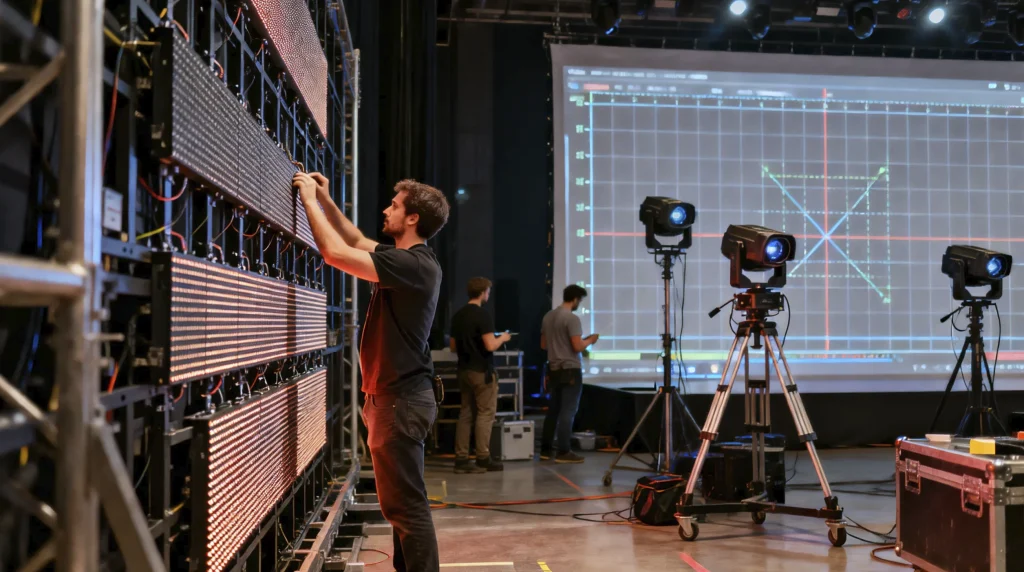
Choosing between LED walls and projection mapping often comes down to budget, setup demands, and operational practicality. While both can deliver premium visual impact, their cost structures and logistics differ in important ways.
Side-by-Side Cost & Logistics Comparison
| Factor | LED Walls | Projection Mapping |
|---|---|---|
| Initial Hardware Cost | Higher upfront investment for panels and processing | Lower entry point for small setups; increases with scale |
| Content Production Cost | Standard video content workflows | Often requires custom 3D mapping content |
| Installation Complexity | Modular assembly; predictable setup | Precision alignment and environment-specific calibration |
| Setup Time | Fast once structure is prepared | Longer due to positioning and mapping process |
| Scalability | Expand by adding panels | Expand by adding projectors and recalibrating |
| Environmental Requirements | Works in most lighting conditions | Best in dark or controlled lighting |
| Maintenance Needs | Durable, replaceable modules | Ongoing calibration and environmental monitoring |
| Operational Reliability | Highly consistent performance | Performance varies with conditions |
| Long-Term Value | Strong ROI for recurring use | Best for unique or temporary experiences |
What This Means for Decision Makers
- Predictable budgeting → LED walls
Costs are clearer upfront and performance remains consistent across venues. - Creative transformation of spaces → Projection mapping
Investment often shifts toward content creation and technical setup rather than hardware alone. - Recurring productions → LED walls tend to offer better long-term value
Modular systems are reusable and easier to deploy repeatedly. - One-time spectacle or architectural storytelling → Projection mapping excels
The technology shines when the environment itself is part of the experience.
In practice, many 2026 productions balance cost and impact by combining both technologies — LED walls for dependable visual delivery and projection mapping for immersive environmental effects.
Best Use Cases for Each Technology
LED walls and projection mapping are not competing solutions in every scenario — they are tools designed for different goals. Choosing the right technology depends on environment, audience experience, and creative intent. Understanding where each performs best helps decision-makers maximize both visual impact and return on investment.
When LED Walls Are the Better Choice
LED walls excel whenever clarity, brightness, and reliability are top priorities. Because they produce their own light and deliver consistent image quality, they perform exceptionally well in high-visibility environments.
Common ideal use cases:
- Concerts and live performances
Large audiences require bright visuals visible from long distances. LED walls maintain clarity even with stage lighting and outdoor conditions. - Trade shows and exhibitions
Busy exhibition halls are brightly lit and visually competitive. LED walls cut through visual noise and attract attention effectively. - Corporate events and conferences
Presentations, branding, and video playback demand reliable, sharp visuals that support professional communication. - Retail environments and digital signage
LED displays provide consistent messaging in environments where lighting cannot be controlled. - Broadcast and studio production
LED technology enables virtual sets and real-time backgrounds with precise color control.
Core strength:
Delivering clear, consistent visuals in almost any environment.
When Projection Mapping Is the Better Choice
Projection mapping shines when the goal is transformation, immersion, and storytelling through space. Instead of displaying content on a screen, it turns real-world objects into part of the visual experience.
Common ideal use cases:
- Architectural light shows
Buildings, monuments, and public spaces become animated storytelling surfaces. - Experiential marketing and brand activations
Projection mapping creates memorable, immersive brand moments that feel unique and artistic. - Museums and exhibitions
Historical environments and installations gain dynamic narrative layers without physical alteration. - Theatrical and stage design
Sets can transform instantly without physical changes, enabling flexible storytelling. - Immersive environments and art installations
Projection mapping surrounds audiences with dynamic visuals integrated into physical space.
Core strength:
Transforming environments into living visual experiences.
Hybrid Use: The Growing Industry Standard
In 2026, many productions combine both technologies to maximize impact. LED walls deliver core visual content with precision and brightness, while projection mapping extends visuals onto surrounding architecture or stage elements.
This hybrid approach blends reliability with spectacle, offering audiences both clarity and immersion in a single experience.
Quick Comparison Summary
| Decision Priority | Choose LED Walls | Choose Projection Mapping |
|---|---|---|
| Bright environment / daylight visibility | ✅ Excellent performance | ❌ Limited visibility |
| Consistent image quality | ✅ Highly reliable | ⚠ Depends on surface & setup |
| Large audiences / long viewing distance | ✅ Ideal | ⚠ Requires careful planning |
| Transforming real-world surfaces | ❌ Not designed for this | ✅ Core strength |
| Immersive spatial storytelling | ⚠ Limited to screen area | ✅ Highly immersive |
| Fast setup & predictable deployment | ✅ Modular and repeatable | ❌ Precision setup required |
| Recurring events / long-term use | ✅ Strong ROI | ⚠ Best for special installations |
| Artistic or architectural experiences | ⚠ Possible but limited | ✅ Outstanding choice |
In one line:
👉 LED walls deliver clarity and reliability.
👉 Projection mapping delivers transformation and atmosphere.
The Future of Visual Displays in 2026 and Beyond
Visual display technology is evolving rapidly, and the conversation is shifting from “LED walls vs projection mapping” to how both technologies can work together. In 2026 and beyond, innovation is being driven by immersive experiences, real-time content generation, and smarter production workflows.
Hybrid Visual Environments Are Becoming Standard
Modern productions increasingly combine LED walls and projection mapping into unified visual systems. LED walls provide the primary canvas for bright, high-resolution content, while projection mapping extends visuals onto stages, architecture, and surrounding environments.
This layered approach allows designers to create spaces where:
- Screens deliver precise visuals
- Physical environments respond dynamically
- Audiences experience seamless visual immersion
Hybrid setups are especially popular in live entertainment, brand activations, and experiential exhibitions.
The Rise of Real-Time and AI-Driven Content
Real-time rendering engines and AI-assisted content generation are transforming how visuals are created and deployed. Instead of pre-rendered media alone, visuals can now respond to:
- Audience movement
- Live performance data
- Environmental inputs
- Interactive triggers
For LED walls, this means more responsive and adaptive content delivery. For projection mapping, it enables dynamic transformation of physical spaces without manual recalibration of creative assets.
Higher Resolution, Greater Efficiency
LED technology continues to improve in pixel density, energy efficiency, and panel flexibility. Ultra-fine pixel pitch displays are becoming more accessible, enabling closer viewing distances and more immersive environments.
Projection technology is also advancing with:
- Brighter laser projectors
- Improved color accuracy
- Faster calibration tools
- More compact hardware
These improvements reduce technical barriers and expand where projection mapping can be deployed.
Immersion as the New Standard
Audiences increasingly expect environments that feel interactive and enveloping. Rather than passive viewing, visual displays are becoming part of spatial storytelling. This trend is driving demand for:
- 360-degree visual environments
- Interactive installations
- Mixed physical-digital experiences
- Environmentally responsive content
Both LED walls and projection mapping play essential roles in delivering these experiences.
The Strategic Outlook
Looking ahead, the most successful visual productions will not choose a single technology — they will select the right combination for each objective. LED walls will continue to dominate environments that demand clarity and reliability. Projection mapping will remain the preferred tool for transforming physical space into narrative experiences.
The future belongs to productions that integrate technology, environment, and storytelling into a single cohesive visual strategy.
Conclusion
LED walls and projection mapping are both powerful visual technologies, but they serve different purposes in modern experience design. LED walls deliver unmatched brightness, clarity, and reliability across a wide range of environments, making them ideal for events that demand consistent performance and high visibility. Projection mapping, in contrast, transforms physical spaces into dynamic storytelling platforms, creating immersive experiences that blend digital content with real-world environments.
As visual expectations continue to rise in 2026, the most impactful productions are no longer choosing one technology over the other — they are strategically combining both. By understanding the strengths of each approach, organizations can design experiences that balance precision, creativity, and audience engagement.
Whether the goal is clear communication, spatial immersion, or a fully integrated visual environment, selecting the right technology — or the right combination — is key to delivering memorable results.
Cebirra specializes in designing and delivering advanced visual display solutions tailored to events, brand activations, and immersive experiences. From concept development to installation and execution, Cebirra helps organizations turn creative vision into powerful visual reality.
FAQ — LED Walls vs Projection Mapping
Which is better for outdoor events?
LED walls are typically the better choice outdoors because they produce their own light and remain clearly visible in daylight. Projection mapping requires darkness or controlled lighting to maintain image quality.
Is projection mapping cheaper than LED walls?
Not always. Small projection setups can cost less initially, but large or complex mapping projects often require multiple high-powered projectors, specialized content creation, and precise calibration, which can increase total costs.
Which technology creates a more immersive experience?
Projection mapping usually provides stronger spatial immersion because it transforms real-world surfaces. LED walls deliver immersive visuals within the display area but do not alter the surrounding environment.
Can LED walls and projection mapping be used together?
Yes — many modern productions combine both. LED walls handle primary visual content, while projection mapping extends visuals across physical structures to create a unified environment.
Which option is better for corporate presentations?
LED walls are typically preferred for presentations because they offer consistent clarity, high brightness, and reliable performance in well-lit venues.
Do both technologies require custom content?
LED walls can display standard video content. Projection mapping often requires custom-designed visuals tailored to the shape and geometry of the projection surface.